Sink or swim gin bid floats

You simply can’t bottle incredible South Australian experiences. Or can you?

Divers who plunge into the pristine depths of Kilsby Sinkhole in the Limestone Coast will soon be able to toast their adventurous spirits with a glass of Sinkhole Gin crafted from the limestone-filtered water.

Brothers Graham and Ben Kilsby are the sinkhole custodians taking immersive experiences to new levels in partnership with gin-loving friends Stuart Edwards and Kris Hamilton.

The Kilsby Sinkhole is world renowned as one of the best sinkhole diving spots. Photo by Ockert le Roux.

Long-term fans of home-brewing, the four mates saw an opportunity to create SA’s newest craft gin with a distinct local flavour.

“We thought how amazing it would be to use the water from the sinkhole – the purest water in Australia – to make the gin,” Ben says.

Tucked away on the farming property that has been in Ben’s family for four generations, the 65m-deep Kilsby Sinkole is rated among the world’s best cave-diving sites due to its exceptional water clarity.

The four men behind the Sinkhole Gin. Photo by Kate Hill.

Diversifying into eco-tourism was the first exciting move for the prime lamb producers, with up to 2000 visitors from around the globe now flocking to their property 15km out of Mt Gambier each year.

Now, they’re poised to make a splash in the drinks trade after 12 months of dedicated research.

“To a gin lover, the whole experience from aroma to palate is paramount and we got very involved in the whole process,” Ben says.

Designed to champion the Limestone Coast region, the gin takes its main flavour profile from muntries – a tiny native cranberry, or ‘emu apple’, which grows wild along the rugged coastline.

A bird’s eye view of the Kilsby Sinkhole. Photo by Ockert le Roux.

“It’s got a type of rhubarb-apple crumble flavour to it, and we’ve also added local honey, a little juniper, lime zest, lemon myrtle – we’ve got almost 20 ingredients each playing a role, and the result is something that is fresh and floral and unique to this region,” Ben says.

In order to guarantee future batch consistency, the Kilsbys have now planted a muntrie crop of their own surrounding the sinkhole. Yes – they’re thinking big, spurred on by Limestone Coast locals who immediately threw their support behind a sink or swim crowdfunding campaign on Pozible, raising close to $30,000 towards the venture.

“If the interest wasn’t there, we would have scrapped the idea, but the first batch has already been pre-sold and we’re expecting delivery prior to Christmas,” Ben says. “It’s going to be a really fun gin to put on the table.”

The Sinkhole Gin.

Pre-orders are now flowing for batch number two, with restaurants and bars also lining up for stock. A limoncello characterised by the bold, robust flavours of local farmhouse lemons is also in the pipeline, but the ultra-pure water will always be the hero ingredient.

“This is just a really fun way for us to be able to celebrate our natural attractions in a completely different way, to a completely new market,” Ben says.

“The Mt Gambier region is known worldwide in diving circles, but people as close as Adelaide don’t realise what assets we have beyond the Blue Lake, so we think this is the perfect pairing.”

Like this story? Nominate a story from your region.
Click here to nominate >>

These inspiring regional stories are made possible by:

Major Partner[logooos_saved id=”5491″]Program Partners

[logooos_saved id=”29687″]

Industry in focus: Craft industries

Throughout the months of November and December, the state’s craft industries will be celebrated as part of I Choose SA.

South Australian craftspeople make up some of our most creative thinkers and makers of sustainable and innovative goods. Read more craft stories here.

Visit I Choose SA to meet the people building business and industry in SA, and to find out how your choices make a difference to our state.

[logooos_saved id=”13411″]

Gumpara offers a different taste of the Barossa

Mark Mader has always known there’s something special about a part of the Barossa where his family first planted vines on Gumpara vineyard 90 years ago. Now he has a major award for his shiraz to prove it.

Gumpara 2014 Hexen Shiraz was named second behind Penfolds’ Grange in Winestate Magazine’s 13th International Syrah and Shiraz challenge, announced in September.

In Mark’s eyes, the prestigious award is a long overdue stamp of recognition for the largely unheralded Light Pass sub-region of the Barossa where Gumpara vineyard is located.

“More sub-regions of the Barossa are being identified on wine labels as the source of exceptional and distinctive fruit, but Light Pass is one area that should be a lot more famous for the quality of what is produced,” says Mark.

He points to the unusual mix of ironstone, marble and terra rosa clay in the Barossa’s gentle north-eastern hillside soils as the reason for the intensity and length of Light Pass fruit flavours.

The Gumpara 2014 Hexen Shiraz.

Mark says the Gumpara brand name clearly explains the significance of his vineyard, which is laid out beside the North Para River and flanked by ancient gum trees.

Its position captures cool gully winds through the summer that bring a unique complexity to the fruit, according to Mark. He identifies this in the best 20 tonnes of fruit from the vineyard that he keeps for Gumpara Wines (the remaining 140 tonnes is sold to Peter Lehmann Wines).

Now Mark and his wife Mandy are keen to share and explain the story of their Light Pass vineyard when they open the Gumpara Wines cellar door to public visitors on November 24.

After many years of supporting two daughters playing high-level basketball through their teenage years, Mark and Mandy now say they’ve got the necessary time to host cellar door visitors – and enough stock to warrant a cellar door presence. While the first Gumpara wines were released 18 years ago, volumes were initially very small.

“Our growth has been cautious. We haven’t wanted to carry massive debt,” explains Mark.

“Our family has traditionally been grape growers selling to other wineries, so it was a big step for me – the sixth generation on this land – to start making wine. It’s been a great thrill to identify how exceptional our fruit is.”

The Gumpara Wines family.

For a while, Gumpara was part of a collaborative cellar door with several other boutique Barossa labels, sharing a rented shop in Tanunda’s main street, but the arrangement proved difficult to manage and stopped after a few years.

Now, an old shed on the Gumpara vineyard has been re-purposed and refitted with timbers salvaged from the 1857 Light Pass Church Manse, and a 4m Redgum slab used as the bar. It will now be open for regular public tastings on weekends, by appointment.

Visitors will be able to purchase the limited-release $240 Hexen Shiraz, named after an old Silesian “witch”, Mutter Jaeckel, who lived near the Gumpara vineyard and created homeopathic remedies for the first Barossa settlers in the 1840s.

This is the first release of this wine – the culmination of a five-year project, sourced from vines up to 90 years old. It replaces the Reserve Shiraz as Gumpara’s flagship wine, which was also a significant award-winner, taking third place in Winestate’s 2012 International Syrah and Shiraz Challenge.

The cellar door opens November 24.

Cellar door visitors seeking a more modest wine will find great value in Gumpara Victor’s Old Vine Shiraz ($32), which also registered the maximum five-star rating in this year’s Winestate International Shiraz Challenge.

Mark is confident that his small cellar door will help bring visitors to Light Pass, and feels the time is right to put this overlooked part of the Barossa on the map.

“A lot of the fruit grown in the Light Pass area has traditionally been sold to big wineries, but never identified on the bottle as a source,” he says.

“There’s a few small cellar door tasting rooms – Pete Scholz’s The Willows, Gibson Wines, Ben Chipman’s Tomfoolery Wines – but it’s not really known as a region to visit.

“I think it’s time to shine a brighter light on the place and highlight what we have here that’s special.”

Like this story? Nominate a story from your region.
Click here to nominate >>

These inspiring regional stories are made possible by:

Major Partner[logooos_saved id=”5491″]Program Partners

[logooos_saved id=”29687″]

Kangaroo Island spins its own unique wool story

When sheep and grain farmer Christine Berry walked into a Japanese clothing store and saw suits tagged with ‘made from Kangaroo Island wool’, she couldn’t resist buying a jacket to take home to Australia.

“When we walked into United Arrows, it’s like Myer in Japan, and saw a suit presented so beautifully and with the Kangaroo Island label it was wonderful, it was so powerful,” the chair of Kangaroo Island Wool says.

It’s been a dramatic change in approach for the collaborative group of 22 shareholders and producers who joined forces in 2012 to create a new way to market and sell their wool.

Before Kangaroo Island Wool was jointly started with veterinarians Greg Johnsson and Deb Lehmann, local producers would sell their produce with little idea of its end destination.

“Traditionally, our wool would take us 12 months to grow on the island, we’d shear and the bales would go to Adelaide and then be sold in Melbourne, we’d have no idea where it would go,” Christine says.

The fabric of the island.

Now they can trace where their wool lands in a global market and they are paid a premium for the high quality product.

This year, they’ve even managed to take it to the next level in selling their own range of wool jumpers, beanies and scarves online and at seven Kangaroo Island stores.

“For me personally, I’ve always wanted to wear a garment made from wool from our farm,” Christine says.

“I do now, I wear a jumper every day made from our wool, it makes me feel proud, I love what we do on Kangaroo Island.”

There’s a strong emphasis on sustainability and animal welfare for the producers who mainly sell through their biggest customer, Australian Wool Network.

The network combines Kangaroo Island wool with New Zealand possum fur to make luxury knitwear for MerinoSnug, and is now also helping to produce products for the group’s own brand.

In fact, it was Kangaroo Island that was the first region in the nation to help launch the Australian Wool Network’s unique Direct Network Advantage (DNA) wool supply program in 2015.

The DNA scheme enables consumers to follow the wool’s journey from bale to garment – when they buy a MerinoSnug product it comes with a QR code to scan and links to a video showing how the wool was produced.

Kangaroo Island wool grower Geoff Nutt.

Christine says the group is committed to a code of practice ensuring farmers focus on sheep health and welfare, social good and environmental care.

And, as a result, the company has a reputation for producing high-end fibre, consistently producing wool finer than the national average.

“As professional woolgrowers our simple philosophy is that looking after our sheep will ensure they look after us,” according to the group.

As demand for the group’s new range grows, it has employed Lucy McNaught as sales and marketing officer and plans are afoot to design a 100% Kangaroo Island wool rug with a local artist.

“On the island we have beautiful food and we have beautiful wine and honey, we know people love that but they are all consumables and we thought there was space for a tangible product for people to buy and take home to remember Kangaroo Island,” Christine says.

At her own farm Deep Dene, she cares for more than 5000 merino sheep with her husband Lloyd and daughter Caitlin.

Kangaroo Island Wool chair Christine Berry.

Lloyd’s parents arrived as Soldier Settlers in 1955 and when Caitlin returned to the island in 2015 after studying animal husbandry in Adelaide, she became the third generation to be farming the land.

They also crop 600ha with GM-free canola, broad beans and wheat, and “we can trace where everything we produce ends up,” Christine says.

Much of the wheat is sold to South Australian company Laucke Flour Mills at Strathalbyn for bread flour and Arnott’s for biscuits.

The family is part of a proud history for the island that began farming sheep in 1836 and, at its peak, was home to 1.24 million of them.

Others among the Kangaroo Island Wool ranks are third generation farmer Simon Wheaton, whose family has been working land across the water from Kingscote at Redbanks for 100 years.

While Mitch Wilson is a fifth generation farmer whose ancestors arrived from England in the early 1860s, buying land at Willson River in 1867.

He and his wife, Ros, now shear about 12,000 sheep a year.

“Wool is a natural, renewable fibre, and Kangaroo Island Wool is dedicated to the long-term development of an industry that is socially and environmentally responsible,” the Wilsons add.

Industry in focus: Craft industries

Throughout the months of November and December, the state’s craft industries will be celebrated as part of I Choose SA.

South Australian craftspeople make up some of our most creative thinkers and makers of sustainable and innovative goods. Read more craft stories here.

Visit I Choose SA to meet the people building business and industry in SA, and to find out how your choices make a difference to our state.

[logooos_saved id=”13411″]

Like this story? Nominate a story from your region.
Click here to nominate >>

These inspiring regional stories are made possible by:

Major Partner[logooos_saved id=”5491″]Program Partners

[logooos_saved id=”29687″]

Shop South Australia is home to a unique collection of over 300 South Australian gifts and goods from more than 70 local makers and producers. Choose local and Shop South Australia.

[logooos_saved id=”32128″]

Meet the makers behind SA’s craft industries

In an ever-changing world of emerging technologies and high-tech systems, now is the perfect time to also appreciate South Australia’s skilled artisans and craft industry entrepreneurs.

Our state’s artists and makers – from furniture makers, jewellers, ceramists, glassblowers, leatherworkers, and fashion designers – are creating works that make waves on a global scale.

Many of our craftspeople are professionals who dedicate their creative careers to showcasing beauty and aesthetics with respect to sustainability and the environment.

Throughout November and December, Brand SA News will take you inside craft industries as part of Brand South Australia’s successful I Choose SA campaign.

Not only will the success stories of traditional craftspeople be told, but so too will the tales of our craft brewers, distillers, winemakers and food producers – those making niché products using high-quality ingredients and processes.

Each of the highlighted craftspeople will have sustainability initiatives in place, whether it be a trendy craft brewery using a sustainable water supply, a craftsman giving a second life to aged wine barrels or a furniture maker creating pieces from recycled timber.

The JamFactory at Seppeltsfield in the Barossa Valley provides a space for craft and design.

Across the eight weeks of craft industries coverage, we’ll bring you these exact stories and many more, including a yarn on Kangaroo Island Wool and its tight-knit group of wool growers, organic and biodynamic winemakers, and botanical skincare labels.

We’ll take you on a tour of Adelaide CBD creative hub The Mill, home to a collection of established and emerging designers. We’ll also go inside Kangaroo Island’s honey industry to explore the sweet stuff made from the island’s Ligurian bees, believed to be the last remaining pure stock of the species in the world.

Two craftspeople will be appointed as Brand South Australia’s newest I Choose SA ambassadors, sharing their personal stories, achievements, challenges and thoughts on the industry.

So, step inside the world of paint, fabric, metal, glass, wood, fabrics, recycled materials, leather, botanicals and natural products to uncover something special.

Want to learn more? For a complete run down of the state’s craft industries, head along to Brand South Australia’s Industry Briefing at Plant 4 Bowden on November 19.

Guests will hear from Business SA chair Nikki Govan, JamFactory CEO Brian Parkes and gin producer Brendan Carter of Applewood Distillery in the Adelaide Hills.

What: Brand South Australia I Choose SA for Craft Industries Industry Briefing
When: November 19, 4.30–6.30pm.
Where: Plant 4 Bowden
Tickets: Click here to purchase.


Industry in focus: craft industries

Throughout November and December, the state’s craft industries will be celebrated as part of I Choose SA.

South Australian craftspeople make up some of our most creative thinkers and makers of sustainable and innovative goods. Read more craft stories here.

Visit I Choose SA to meet the people building business and industry in SA, and to find out how your choices make a difference to our state.

[logooos_saved id=”13411″]

Shop South Australia is home to a unique collection of over 300 South Australian gifts and goods from more than 70 local makers and producers. Choose local and Shop South Australia.

[logooos_saved id=”32128″]

SA film industry attracts record spend in screen production

South Australia’s film industry continues to reach new heights, with the state achieving a record share of national screen production expenditure in 2017/18.

With a number of big feature films shot in SA in the past 12 months, including the remake of the Australian Coorong classic Storm Boy, SA reached a new record of screen production and PDV (post production, digital and visual effects) spend at $82 million.

According to Screen Australia’s National Drama Report, the state made up 10% of national screen production expenditure in 2017/18, and recorded its third consecutive year of growth.

SA and WA were the only states in Australia to have achieved an increase, with our state’s national expenditure share increasing from 3% to 10% in 12 months.

The National Drama Report measures the health of Australia’s screen industry by looking at the production of local and foreign feature films, TV dramas, online programs and PDV.

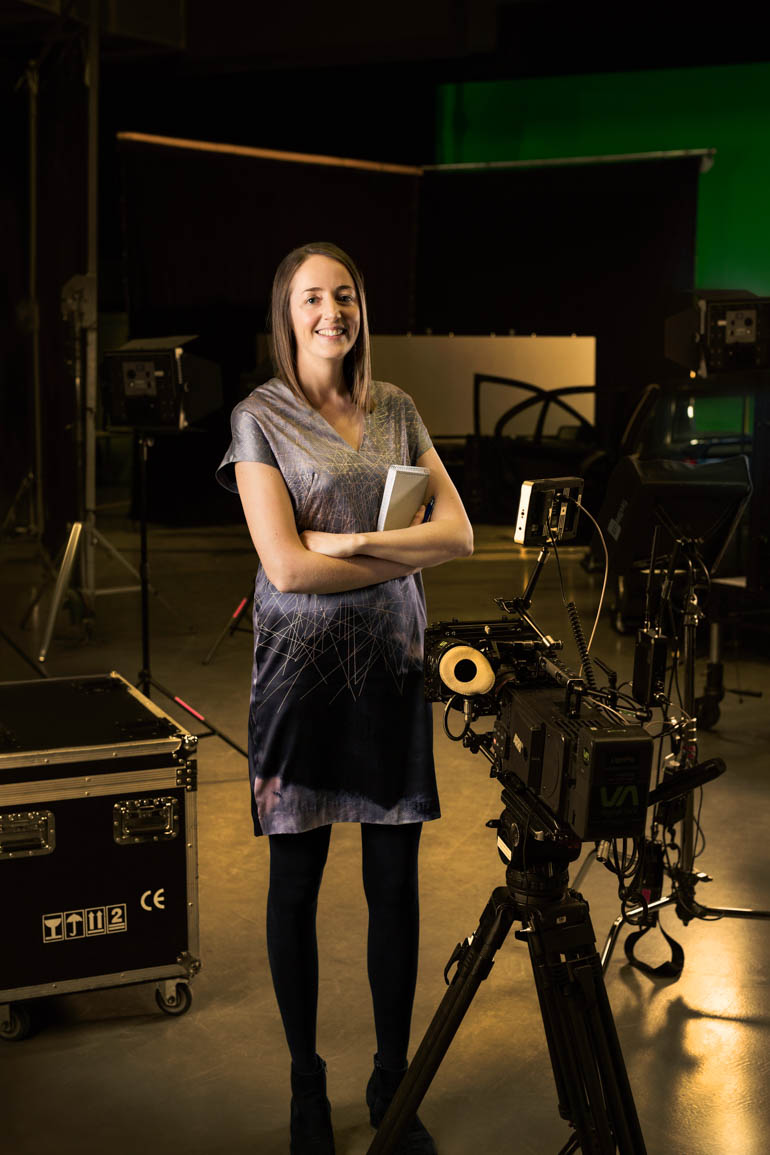
Matchbox Pictures opened its SA office in 2018 and filmed season three of Channel Seven’s crime drama Wanted. Pictured is producer Kirsty Stark, an I Choose SA ambassador.

SA has been the location of choice for a number of films in the past financial year, including Storm Boy, I Am Mother, Top End Wedding, and The Flip Side.

TV productions include Pine Gap (ABC/Netflix), Wanted season 3 (Channel Seven), and If Time Flows Back, one of only four Chinese titles shot in Australia in 2017/18.

Half the national expenditure in SA in 2017/18 came from PDV work on titles such as Animals, Hotel Mumbai, The Nightingale, Storm Boy and foreign features Tomb Raider (US/UK), X Men: Dark Pheonix (US) and Animal World (China).

Minister for Industry and Skills David Pisoni says these recent results demonstrate the state’s thriving local screen sector and is a testament to the work being done to ensure SA is a competitive and attractive production destination.

“This includes developing the infrastructure to support a growing industry, the continued development of the state’s capacity to support multiple productions concurrently, and creating opportunities for skills development,” Mr Pisoni says.

South Australian Film Corporation CEO Courtney Gibson says a combination of strategies including rebates and grants, studios and locations, SA’s world-class PDV companies and the Adelaide Film Festival Investment Fund, were positioning the state to capture even more national and international spend in the future.

Interested to know what other famous films have been shot in SA? Read ‘SA the star of Australian cinema’ here.

Header photo features Rebecca Gibney, left, and Geraldine Hakewill in ‘Wanted’.

Visit I Choose SA to meet the people building business and industry in SA, and to find out how your choices make a difference to our state.

[logooos_saved id=”13411″]

Eat more pork and help save our bacon

‘Get some pork on your fork’ is the famous line second-generation pig farmer Andrew Johnson needs South Aussie shoppers to hear now more than ever.

The owner of Mt Boothby Pastoral Company is standing in the middle of the stall-free, straw-based growing shelter, his livelihood snuffling at his boots.

At the centre of his 18,000-acre mixed farm enterprise in the small Murray Mallee service town of Tintinara, 40km from Keith, is a 1000 sow, farrow to finish operation, one of the state’s larger piggeries.

Andrew has spent most of his working life in Tintinara, his father establishing the piggery in the late 1970s as a way to diversify farm operations.

“I always knew I was going to be a farmer and pigs have always been a key part of what I love doing,” says Andrew, Brand South Australia’s latest I Choose SA ambassador.

“They’re very intelligent animals and they’re very efficient, I have a lot of curiosity for them.”

Intelligent, yes. But SA pork quite literally brings home the bacon.

The state’s pork industry contributes $385 million to the SA economy, supporting almost 2500 full time local jobs and providing $188 million in household incomes for local families.

This is according to figures released earlier this year by Australian Pork Limited which also acknowledges that the pig production sector is more important in SA than in any other state.

Tintinara pig farmer and I Choose SA ambassador Andrew Johnson. Photo by James Knowler/JKTP.

Despite its prevalence to the local economy, the pork industry is currently stuck in a glut due to a downturn in prices, an oversupply of meat and increased feed grain prices.

Andrew believes the oversupply issues have been brought about by the industry becoming a victim of its own success, as pig producers nationwide undertook significant farm investments and some expansions, shooting up productivity.

“The pricing is depressed at the moment and it has been because of some oversupply issues,” Andrew says.

“Prior to now, we were in pretty good times and through these better times producers were investing in their infrastructure, making improvements and are now achieving better productivity out of their piggeries.”

To counteract the industry-wide struggles, the pork industry is committed to backing its own, with a number of initiatives rolling out to secure the wellbeing of farmers and their families.

Pork SA chair Mark McLean explained at a recent Brand South Australia agribusiness event how charity campaigns, farm support services, and choose local pushes were among efforts to help the industry bounce back.

“We are experiencing a downturn at the moment, there is no doubt about that. But the opportunity is what do you do, how do you respond?” he says.

“The first priority we identified was to support our people, to support our farmers, to help producers make decisions as early as possible by funding well-being counsellors and providing pork industry specialist support to rural financial counsellors.”

In addition, Pork SA’s charity campaign involves donations of pork products to Catherine House in Adelaide, Foodbank and The Hutt Street Centre. The initiative not only helps those less fortunate but further spreads the important message about the need for households to consume more locally grown pork.

South Aussie shoppers will also play a part in giving the industry a leg-up, as households are urged to not only choose Australian pork, but eat more of it.

Andrew Johnson’s sons Will, 10, and Eddie, 11, on the farm at Tintinara. Photo by James Knowler/JKTP.

Consumers should look for the bright pink Australian Pork logo on packaging to ensure the product is grown by Aussie pig farmers.

Mark encourages shoppers to also keep an eye out for country of origin labelling and only purchase pork products made from 90% or more Australian ingredients.

“If it doesn’t have more than 90% on that barcode, it’s probably not Australian, it’s probably the saline, the water, it might even be the packaging.”

Back on the farm at Tintinara, Andrew Johnson echoes the same sentiments.

Consumers backing Aussie pork means that not only will his two young sons have a solid chance at taking over the family farm in coming decades, but it also means something for the 15 full time team members currently employed by the business.

“Our business is very important locally, it’s one of the major employers along with Thomas Foods International feedlot up the road,” Andrew says.

“The economic impact per sow is about $3000 back into the community, so that gives you an idea about what impact it has. The pig industry is incredibly important in our regions.”

But like all Aussie farmers, pork producers are resilient and Andrew is quick to point out the many strengths of the industry.

“The pig industry has always been very forward and I’m very proud of it. About eight years ago we decided voluntarily as an industry to phase out the use of sow stalls and that was a first in the world,” he says.

“Over 90% of our industry is quality assured to ensure food safety, welfare and environmental regulations are adhered to.”

Andrew also speaks highly of the industry’s forward-thinking approaches to genetic improvements and bio energy production.

In 2004 he took research into his own hands when he won a Nuffield Scholarship to study sow welfare, disease management, electronic identification and sow housing. He subsequently became chairman of Nuffield Australia and a director of Nuffield International, having completed both roles recently.

Tintinara pig farmer Andrew Johnson urges shoppers to choose Australian grown pork products. Photo by James Knowler/JKTP.

Other strengths of the state’s pork industry includes our processing facilities. Every week about 22,000 ‘baconer’ pigs are sent to either JBS at Port Wakefield or Big River Pork at Murray Bridge, two of the nation’s largest pork abattoirs. The majority of Australian pork is sold to the domestic market, with some entering Singapore and New Zealand.

Despite the challenges, Andrew is confident about the future of SA’s pig industry and the state’s agriculture sector as a whole.

He says employment opportunities are in abundance in most regional towns, but admits the next challenge is encouraging more people to choose to live and work in country areas.

As a keen supporter of the rural town’s sporting clubs, he says Tintinara and its humble population of 527 will always be home.

“I love livestock and animals, country areas and the people in them, I love my community,” Andrew says.

“I couldn’t see myself anywhere else, it’s a great place to be.”

Industry in focus: Agribusiness

Throughout the month of October, the state’s agribusiness industry will be under the magnifying glass as part of I Choose SA.

South Australian farmers, producers, agricultural researchers and biosecurity workers are the lifeblood of our country communities and are big players in the state’s overall economic welfare. Read more stories here.

Visit I Choose SA to meet the people building business and industry in SA, and to find out how your choices make a difference to our state.

[logooos_saved id=”13411″]

Like this story? Nominate a story from your region.
Click here to nominate >>

These inspiring regional stories are made possible by:

Major Partner[logooos_saved id=”5491″]Program Partners

[logooos_saved id=”29687″]

Adelaide Zoo reveals plans for $1.1m Variety Children’s Zoo

The next generation of conversationists will be able to experience the wonder of the natural world when Adelaide Zoo develops a new $1.1 million children’s zoo in 2019.

Zoos SA has unveiled plans for the immersive and interactive Variety Children’s Zoo that will be connected to the existing and ever-popular Nature’s Playground, an area where kids can explore nature-inspired spaces including water features, a natural creek bed and aerial walkways.

Construction of the new children’s zoo will be developed in partnership with children’s charity Variety SA, and will begin in 2019.

Quokkas, critically endangered bettongs, goats and other creatures will move from the existing children’s zoo to the new space near the zoo entrance.

The area as it currently stands.

The new development will feature balance beams and ladders for goats, climbing branches for quokkas, a dedicated presentation area for keepers to host educational talks and aerial walkways connecting to Nature’s Playground.

Zoos SA CEO and I Choose SA ambassador Elaine Bensted says the new Variety Children’s Zoo will help encourage and develop the next generation of conservationists, no matter their ability.

“Our vision for the Variety Children’s Zoo is to help kids get hands on as they learn and connect with wildlife, and in doing so develop a strong passion for conservation,” she says.

“The Variety Children’s Zoo will be a continuation of Nature’s Playground – making Adelaide Zoo the number one destination for the kids of South Australia and their families.

“When finalising the plans, we ensured we had an equal balance between animal welfare, unique facilities, exciting animal encounters, and educational yet magical moments for visitors to experience.”

An artist’s impression of the newly developed Variety Children’s Zoo.

Variety SA CEO Mark McGill says the charity is proud to again partner with the zoo to bring the next stage of children’s play development to life.

“Variety is enormously proud to have opened the doors of the Adelaide Zoo to more children who are sick, disadvantaged or who have special needs,” he says.

“These children have enjoyed the freedom and inclusiveness of the all abilities Nature’s Playground, proudly supported by Variety, and these wonderful outcomes will only be expanded with the development of the Variety Children’s Zoo.”

The public will have a chance to become the face of the new children’s zoo, with a large art installation taking centre stage in the area. For $50 people can purchase a tile with their photo to remain at the zoo into the future.

Barmera’s Crossfield Cottage a lingering love story

Visitors to a Barmera bed and breakfast in South Australia’s Riverland can step back into the days of post-WWI settlement as well as learn about a 1970s love story, which lasted almost four decades.

Owners of Crossfield Cottage Mark and Carolyn Huckel purchased the tired old 1920s property in January 2015 and spent two years renovating the humble abode.

“We had always wanted to create a B&B, but we had never found the right place or location,” Carolyn says.

This dream became a reality when Mark discovered the old Barmera cottage, which was the childhood home of his friend, David Crossfield.

David’s parents, John and Margaret, bought the property in 1976 and was the first and only home the couple ever owned. Margaret died in 2006 and John in 2013.

The renovated cottage provides old world character and charm and showcases local produce.

The Huckels first expressed interest in buying the property from David and his sister Emma, when they were helping them sort through things in the home, after their father’s death.

“Two years later they came back to us and said we are going to be ready to sell in six months, are you interested?” Mark says.

The Huckels saw great potential in the property, set among a picturesque country landscape surrounded by vineyards, fruit orchards and natural bush.

The house was originally built to accommodate WWI veteran Thomas Bawden and his wife Rachel.

Its original stove has been saved and used by the Huckels in the outdoor area, while the white baltic pine floorboards inside the home were also spared.

A coal heater and Margaret Crossfield’s dressing table are key features in the front bedroom.

Items dating back to the 1920s such as vintage telephones, farming tools, kitchen scales and replica war medals are also on display in the lounge room, presenting a glimpse at a bygone era.

Thomas died in 1964 and the house was then purchased by its second owners, another WW1 veteran Albert Jones and his wife, Alice.

The Crossfields were then the third owners of the property and lived there for four decades, so the B&B still features a number of items which belonged to them.

Much of the Crossfield’s original kitchen and cupboards have also been preserved.

A coal heater and wooden dressing table are prominent features in the front bedroom and the triangle she used to summon her family to meals hangs proudly in the entertaining area outside.

Many of the flowers Margaret Crossfield loved are still grown in the garden and some older residents who are familiar with the species have also given bulbs for the Huckels to plant.

The original wood stove has been placed in the outdoor area as a show piece.

It is evident the couples’ love for each other was strong, for example in the lounge room where the Crossfield’s favourite courting song, The Seven Daffodils is recognised with a painting by Jamahl Pollard, a talented Riverland artist with impaired vision.

Guests can read the words of the song in the Crossfield Cottage history book inside the B&B.

Many Barmera locals who knew the Crossfields have embraced the renovation of the cottage and property.

The B&B was finally opened by the Huckels in March 2017, after many months of hard work, with Mark Huckel saying the encouragement they received from friends and locals kept them committed to the project.

The Huckels endeavour to ensure the products at their B&B are from the Riverland or other parts of SA if they aren’t available locally.

This includes Riverland wine, dried fruit, nuts, fresh fruit and meat from a local butcher.

“Our aim is to enable guests to stay in a cottage featuring character, charm and a dash of luxury and enjoy our beautiful region,” Carolyn Huckel adds.

Header photo features Crossfield Cottage owners Mark and Carolyn Huckel.

Like this story? Nominate a story from your region.
Click here to nominate >>

These inspiring regional stories are made possible by:

Major Partner[logooos_saved id=”5491″]Program Partners

[logooos_saved id=”29687″]

Riverland almonds – but not as we know them

Jarrad and Jackie Casaretto realised it would take a special product to radically rethink their approach to almond farming in South Australia’s Riverland.

They think they’ve found it with almond butter – a full-flavoured paste that is quickly winning favour in the United States and around the world as a nutritious health food.

Jarrad was quick to spot this emerging trend and thought they should act fast to get on board now. It meant seizing control of their commercial destiny by becoming a secondary producer – launching and controlling their own brand called The Almond Farmer, rather than just being a bulk provider of the primary ingredient.

The Almond Farmer range now comprises jars filled with three types of almond butter (plain, chocolate, and date with chia), along with packets of raw and roasted almonds, ground almond meal, and pure almond oil as a skin care product. And despite launching the brand with scant resources, it has quickly gained traction in the market through direct sales.

Chocolate almond butter on bruschetta, topped with fig, banana and raspberries.

“The first thing I did was start up a Facebook page, and that got the word out to consumers that we were doing something different,” Jackie says. “We’ve approached this from the point of figuring out what the market wants, and then re-shaping what we do to make our almonds connect with those interests.”

This represented a big shift in how almond farmers have traditionally operated in Australia, but the Casarettos felt it was a necessary step.

Having originally come from urban jobs in Queensland, Jarrad and Jackie embraced the idea of joining Jarrad’s parents, Pam and Dennis Casaretto at Taylorville (near Waikerie) in the Riverland, to expand on their retirement hobby farm by harvesting more almonds.

When a second almond property became available in the region during 2012, Jarrad and Jackie agreed to buy it and shifted from QLD.

“We said yes because we wanted a life outdoors rather than being in the city,” says Jackie. “We love food and thought this would be a great way of getting involved in the best produce.”

The almond orchard in blossom.

However, the envisaged idyllic rural lifestyle didn’t unfold as easily as they planned, so they re-thought how to best run their combined almond farms, drawing on their previous employment skills in business management and marketing. They focused on producing specialised items that could fill a high-revenue niche.

“It was a case of looking at other businesses seizing opportunities with niche products in other markets, and thinking ‘why aren’t we doing that?’ We had to look at our farm and its produce through a different business prism,” Jackie says.

“We saw an opportunity to take a unique niche product to market through direct sales – which is not how things are usually done in Australian farms.”

It took a lot of trial and error for The Almond Farmer products to take shape – after planting and nurturing a host of different almond varieties, then figuring what is the best application for each variety according to its oil content. But perseverance has paid off in the case of perfecting almond butter.

Jackie Casaretto and her husband Jarrad swapped their urban careers in Queensland for life on the land in the Murray and Mallee region.

“All nut spreads are now growing in popularity, and we’re seeing that in the emerging health food scene, a product such as pure almond butter makes clear sense to consumers,” Jackie says.

“It makes good sense among the health-conscious mums, in particular. We’ve had so many enquiries from mums with kids suffering allergies, looking for almond products that have not been in contact with any other nuts. Because we process all our almonds on our farm and there’s no risk of cross-contamination with other nuts, they’re relieved to find a product that’s reliable.”

Some food market pundits are wondering whether this product can explode into the public consciousness and enjoy a similar commercial boon as Nutella. The Casarettos hope so but know the mainstream market now has to embrace the quality and purity of what they are providing.

Every almond orchard needs a four-legged helper.

“It is more expensive because of the cost of using only highest-quality ingredients, and not bulking it up with cheap fillers. Therefore, almond butter is a treat full of nutrients and not just packed with sugar,” Jackie says.

“Our products plug into a lot of what we believe. Our family is passionate about sustainability, the authenticity of Australian-grown food, and promoting a healthy balanced diet and lifestyle. Our Almond Farmer goods are a perfect fit.”

While The Almond Farmer’s strength is through its website sales, the Casarettos are in discussion with distributors, and some products are already being stocked by Adelaide food specialty stores such as Tony & Mark’s.

Like this story? Nominate a story from your region.
Click here to nominate >>

These inspiring regional stories are made possible by:

Major Partner[logooos_saved id=”5491″]Program Partners

[logooos_saved id=”29687″]

And the 2018 Regional Showcase winners are …

Our Top 15 finalists were an impressive bunch. Now the votes are in and the winners of Brand South Australia’s Regional Showcase program have been announced.

The Tumby Bay Progress Association took home the People’s Choice Award for its efforts in transforming the Eyre Peninsula seaside town’s stunning silo mural.

Another volunteer-run community group, the Brinkworth Progress Association, won the Community Award for its hard work in recent years to improve facilities in the quiet Mid North town.

The Business Award went to Eyre Peninsula power service company Cowell Electric, a bust to boom company employing more than 100 people across its Cowell and Olympic Dam sites.

Individual success stories from across regional SA were celebrated at Brand South Australia’s annual statewide celebration evening on October 26 at one of the state’s hottest new attractions, the multimillion-dollar Bend Motorsport Park in Tailem Bend.

The Tumby Bay art silos. Photo by Robert Lang Photography.

The remaining 12 finalists were also celebrated for their achievements in business success, innovation, and community spirit.

More than 200 people travelled to Tailem Bend from all corners of the state, including the Riverland, APY Lands, Adelaide Hills, Mid North and Eyre Peninsula.

Finalists included Port Augusta business Max Cranes, inspiring Limestone Coast restauranteur and Afghan refugee Hafeezullah Haidari, and outback ambulance volunteer Susan Pearl from historic mining town Blinman. Click here to read the Top 15 stories.

“I’d like to thank everyone who was involved, including the nominees, our team of journalists, the finalists and winners as well as the general public for reading the stories and voting,” says Brand South Australia CEO Karen Raffen.

“Of course, this special program would not be possible without the support of the councils, sponsors and each of our partners, in particular, our major partner and sponsor Primary Industries and Regions SA.”

Red earth and blue skies at Cowell Electric’s Olympic Dam site.

Minister for Primary Industries and Regional Development, Tim Whetstone, congratulates all winners and finalists.

“The stories of this year’s showcase program have really reflected the vital role that our regions play in the state’s economy and wellbeing,” he says.

“There are so many positive stories to uncover throughout SA, and the Regional Showcase does just that – sharing and celebrating the achievements of our regions across the state, and the world.”

ABC radio presenter Spence Denny hosted the evening. The three winners were awarded the iconic glass pear trophies which are synonymous with regional excellence and endeavour.

Brinkworth Progress Association members lay engraved pavers in time for the town’s 125th anniversary.

Community Award – Brinkworth Progress Association

This local community group is a prime example of volunteers working together for the better of their people.

The Brinkworth Progress Association in the Mid North has worked hard in recent years to beautify the town, raising money for the upgrade of visitor amenities, attractions, camping groups and walking trails.

Brinkworth has suffered a population drain in 2011, with local numbers dropping from 401 in 2006 to just 188 in 2011. But it crept back up in 2016 with 285. Could it be the efforts of local volunteers drawing people back in?

Business Award – Cowell Electric

This Eyre Peninsula business manages power stations and distribution networks, providing 2400 customers in 13 remote towns with electricity.

The business was formerly run by managing director Sue Chase who is stepping down and handing the Cowell Electric reigns to fellow regional company Ahrens.

Cowell Electric has overcome economic hardship in the past, as it faced liquidation in 2000 until Sue stepped in and steered a huge turnaround.

People’s Choice Award – Tumby Bay Progress Association

Earlier this year Tumby Bay unveiled its stunning artwork painted on the town’s giant grain silos.

The Tumby Bay Progress Association ran the project which has since become a major tourist attraction.

Painted by Argentinean artist Martin Ron over five weeks, the artwork joins a number of other works that have popped up on silos across country SA and Victoria.


HOLD UP! That’s not it for Regional Showcase. We’re always on the hunt for a good yarn, regional success stories and examples of country folk going above and beyond for their community.

Submit a story idea for the 2019 Regional Showcase, and give an individual, business or organisation the recognition they deserve.

Click here to nominate >>

These inspiring regional stories are made possible by:

Major Partner[logooos_saved id=”5491″]Program Partners

[logooos_saved id=”29687″]