How the Port Augusta community helped repower the town with solar

Port Augusta’s Lisa Lumsden was in the supermarket when news broke of the town securing a $650m solar thermal power plant – the biggest of its kind in the world.

The announcement of SolarRerserve’s Aurora Solar Energy Project came with the promise of 650 construction jobs, 50 ongoing positions and delivered an immediate boost in town prosperity.

“Everybody was congratulating one another,” says Lisa, a local councillor and former Repower Port Augusta chairperson.

“The community attitude shifted because we had a new future coming.”

The news of the 150mW solar thermal power plant came in August 2017, more than a year after Port Augusta’s northern coal-fired power station closed, marking the end of an era.

After a five-year push from community advocacy group Repower Port Augusta for a switch from coal to solar, the town was on track to becoming a renewable energy powerhouse.

The Repower Port Augusta Group with Premier Jay Weatherill, Energy Minister Tom Koutsantonis and SolarReserve CEO Kevin Smith during a tour of the community.

The Aurora Solar Energy Project, located 30km north of Port Augusta, incorporates eight hours (1100mW hours) of storage.

Construction is expected to start in the first quarter of 2018 and be completed by 2020.

It will involve a field of mirrors focusing sunlight onto a receiver at the top of a tower – the tallest of its kind in the world.

PHOTO: SolarReserve.

Liquid salt is pumped through the receiver where it’s heated to 565C before the salt is used to generate steam, drive a single turbine and generate electricity.

It’s designed to store between eight and 10 hours of energy, meaning it can operate when the sun is not shining.

Lisa says its widely recognised that the persistence and grit of the Repower Port Augusta Group helped secure the project.

The group advocated with both the Federal and State governments, held community forums with energy experts and worked with the local council, unions, businesses and environment groups nationwide.

The tower is the tallest of its kind in the world. PHOTO: SolarReserve.

“We were able to create a network of people around Australia to lobby for our town,” Lisa says.

“We want long-term jobs and we know that the coal-fired power station was going to close and that it wasn’t good for the environment.

“Our volunteers were putting in enormous hours and many sacrifices were going on behind the scenes.”

The Aurora Solar Energy Project is one of a handful of renewable energy projects in Port Augusta and expected to increase competition and lower power prices.

“The solar thermal plant will be the jewel in the crown but there are seven other projects under construction,” Lisa says.

“What we’ve got is quite incredible and the rest of the world will be watching.”

Current Repower Port Augusta chairperson Gary Rowbottom is a former Alinta Energy employee, having worked at the coal-fired power station for 17 years.

Repower Port Augusta chairperson Gary Rowbottom at a solar celebration event in September.

He watched the sun set on the Northern Power Station in 2016 but says the move away from coal was “crucial”.

“The cost of conventional (power) generation was going up, the cost of concentrating solar thermal down, and the convergenace of those relative costs reached a point where the gap was not much – with the benefit of no emissions and a reasonable number of jobs,” Gary says.

“I pushed the jobs line pretty hard myself, as that was a differentiating point from other forms of renewable energy, as was, in terms of scale, the amount of storage (mW hours/day) that concentrating solar thermal could provide.”

“There is no better place to build the solar thermal power plant than Port Augusta.”

[mappress mapid=”206″]


This I Choose SA for Industry story is made possible by sponsor, MinterEllison.

Like this story? Nominate a story from your region.
Click here to nominate >>

These inspiring regional stories made possible by:

Major Partner[logooos_saved id=”5491″]Program Partners[logooos_saved id=”17589″]Major Media Partner[logooos_saved id=”5506″]


A touch of a European Christmas in Hahndorf

You won’t find many crackling wood fires, snow scattered rooftops or mugs of eggnog during the festive season in South Australia.

But venture down the southern end of Hahndorf’s main street in the Adelaide Hills and you might just catch a glimpse of a European Christmas.

Since 2012 C3 Church Adelaide Hills Pastors Bruce and Julie Williams have brought the magic of a European Christmas market to Hahndorf – Australia’s oldest surviving German settlement.

The Hahndorf Christkindlmarkt, now in its sixth year, has drawn a total of 90,000 visitors to the popular tourist strip to enjoy a glass of GlĂźhwein and wander among an array of handicrafts.

The Hahndorf Christkindlmarkt captures the essence of a traditional European Christmas market with twinkling lights and bespoke offerings.

Run by volunteers from the C3 Church Adelaide Hills, the Hahndorf Christkindlmarkt will return for three nights from Friday, December 15.

Bruce and Julie were inspired to bring a touch of Europe to Hahndorf upon visiting traditional Christmas markets in Austria, Germany and the Czech Republic.

“They were remarkable, but probably the most influential was Munich,” says Bruce.

“We started to think about things we could do at home and it dawned on us that we’re in the oldest German town in Australia.

“We put the idea of a Christmas market out to the church and we knew that it would take many volunteer hours to pull it together.”

Pastors Bruce and Julie Williams in traditional German attire.

Daylight saving and the Adelaide Hills’ breezy summertime climate were perfect for an outdoor Christmas market featuring displays of handicrafts, baked goods, artwork and gifts beneath a display of twinkling fairy lights.

During its first year, the Hahndorf Christkindlmarkt had stallholder vacancies, but now there’s a waiting list.

The market has also expanded its footprint by spilling out onto Auricht Road, which closes to traffic for the duration of the event.

The event received recognition from the Mount Barker Council recently when it was crowned the 2016 Community Event of the Year.

Bruce says many Hahndorf traders have embraced the thousands of visitors to the town by keeping their doors open past regular trading hours.

The C3 Church Band will perform carols at 9.15pm every night.

He says the true meaning of Christmas was still evident through the singing of Christmas carols and a nativity scene at the market.

“We believe in the message of Christmas in the birth of Christ and that was still a strong element in the European context as well,” Bruce says.

“The point (of the market) is not to try and get people to the church, there’s no pressure, we just want people to have fun.

“It’s a joyful and happy place.”

The market is expected to attract 30,000 people across three nights.

A licensed area allows visitors to enjoy Lobethal Bierhaus brews and Lobethal Road wines, as well as traditional German-style mulled wine, GlĂźhwein.

Bruce says the majority of stallholders are South Australian, however, the market experiences demand from exhibitors across the country.

The Hahndorf Christkindlmarkt is on Friday December 15, 5 – 10pm, Saturday 4pm – 10pm, and Sunday, 4pm –10pm.

[mappress mapid=”205″]

Like this story? Nominate a story from your region.
Click here to nominate >>

These inspiring regional stories made possible by:

Major Partner[logooos_saved id=”5491″]Program Partners[logooos_saved id=”17589″]Major Media Partner[logooos_saved id=”5506″]

Riverland solar solution a saviour for growers

Riverland electrical contractor Mark Yates has put the power in the hands of the region’s food producers.

Redmud Green Energy, an offshoot of Mark’s core business Yates Electrical Services, is allowing landowners to turn vacant or unviable parcels of land into solar farms.

By selling the energy to the National Electricity Market (NEM), the result is a second income stream for farmers and a stronger local economy.

Launching two years ago, the innovative solar scheme has already thrown a lifeline to a number of Riverland grape and citrus growers suffering from high irrigation costs.

Mark Yates of Yates Electrical Services and Redmud Green Energy.

With experience working across electrical, high voltage and wind farm installations since launching Yates Electrical Services in 2004, Mark also knew that SA was in the midst of a “solar boom”.

He realised a way for farmers to generate a supplementary income by reactivating one acre land blocks into solar farms.

So he studied the NEM and installed a trial solar farm in Renmark before Redmud’s first commercial site was switched onto the national grid five years later.

An average 200kW Redmud site features about 800 solar panels mounted over a land footprint of about one acre.

The array produces about 330mW hours annually – enough to power 40 homes for 12 months.

A Redmud solar farm among the vines in the Riverland.

The energy is sold to the national electricity grid through the spot market, offering landholders an average 10% return on their investment per year.

Currently 14 200kW sites are currently operating across the Riverland, while a number of larger arrays are under development with backing from several overseas equity investors.

One of Redmud’s first customers was Renmark-born citrus and grape grower Sam Albanese, who replaced a block of under-producing vines with a solar farm.

Sam says the solar farm earned him a 15% return on investment in 2016 and cut his power bill by a third.

He says the solar farm requires very little maintenance, unlike vineyards, and is hoping to install a second one in early 2018.

“With the solar farm you don’t need to do anything but occasionally spray the weeds around it and that’s it,” he says.

“It makes good economic sense and it’s good for the environment, so it’s a win-win.”

Yates Electrical Services has a team of 35 employees, including five young apprentices.

Mark says the business has received interest interstate, but he plans to keep the focus on SA.

“We understand the market and the process here in SA to get the projects across the line,” he says.

“Our climate is perfect ­– SA is good for renewable resources and we have reasonably priced parcels of land.”

The solar farm offers farmers a secondary income stream by providing an average 10% return on their investment per year.

Mark says he plans for Redmud to diversify in the future, helping to drive down power bills and strengthen SA’s reputation for being a leader in renewable energy.

He says software is currently under development to allow Redmud energy to be sold directly to customers, instead of going through the energy retailer.

“We want to be able to sell electricity directly to the customer … it takes out the middle man,” Mark says.

“Energy is a staple of life and we think that it should be affordable, reliable and not monopolised.”

The electrician-by-trade says SA has a big future in renewable energy.

“Renewable energy has got significant momentum not just in Australia but worldwide,” he says.

“The writing is on the wall.”

Yates Electrical Services is based in Paringa, 5km from Renmark.

This I Choose SA for Industry story is made possible by sponsor, MinterEllison.

No loneliness for SA’s outback cop and her sidekick roos

Patrolling the red sandy plains of Murputja 1200km from Adelaide, and outback cop Tiffany Greig is far from lonely.

Despite working at the most remote police station in South Australia, the Senior Constable is often joined by a pack of crime fighting sidekicks – rescued joeys, wild dingoes and a kelpie named Kip.

Senior Constable Greig works in the Aboriginal community of Murputja in the APY Lands, just south of the Northern Territory border.

It’s not unusual to spot a rescued joey in the back seat of her 4WD police patrol vehicle.

Nor is it surprising to find her walking Kip with a pack of wild dingoes, George, Teddy, Daisy and Rosie, trailing behind.

While keeping the community safe might be Senior Constable Greig’s primary job, she’s also a bit of a social media star.

A post shared by Tiff Greig (@outbackcop_tiff) on

//platform.instagram.com/en_US/embeds.js Senior Constable Greig with TV star Ernie Dingo.

Her Instagram page has built up a following of 3000 people who can view her experiences with locals, tourists, and wildlife.

Senior Constable Greig was inspired to share with the world her life as a Far North cop when rugby union star Nick ‘Honey Badger’ Cummins was passing through Leigh Creek.

She says the sportsman suggested using Instagram to help promote the region and share a day in the life of an outback cop.

“Ever since then people have taken an interest in this female copper and her joeys,” Senior Constable Greig says.

Throughout her policing career she has cared for seven joeys, rescued from the roadside after their mothers were hit by cars.

The star of her Instagram page is adopted baby roo Quinn, who recently died from a snakebite.

She says an Instagram photo of the pair in the front bar of renowned outback pub The Prairie Hotel has been viewed one million times.

A post shared by Tiff Greig (@outbackcop_tiff) on

//platform.instagram.com/en_US/embeds.js A joey walked into a bar … and became an Instagram star!

In September, the duo even appeared on Channel 10’s The Project.

“He was always a hit with the tourists and great for community engagement and talking about road safety with kangaroos,” Senior Constable Greig says.

“He was a good icebreaker.”

Working alongside one other police officer, she says Murputja and the surrounding area’s crime rate is extremely low.

“We drive around the community and are usually able to nip things in the bud before they happen,” Senior Constable Greig says.

“Our job involves a lot of community engagement – the Anangu people are very gentle and have quite a calming culture.

“We have some really good yarns with the elders.”

A post shared by Tiff Greig (@outbackcop_tiff) on

//platform.instagram.com/en_US/embeds.js A typical day as a Murputja police officer involves engaging with locals.

Senior Constable Greig was born in the UK, moving to Australia as a child.

Before joining the police force she studied at university and worked in the wine industry for more than a decade.

But a slow burning desire to become a policewoman eventually took over and so she joined the force in late 2009.

“It was a good time to be a female in the police force and I think I had enough life experience to be successful at it,” she says.

“I was first posted to Berri in the Riverland for my probation period of two years.”

A post shared by Tiff Greig (@outbackcop_tiff) on

//platform.instagram.com/en_US/embeds.jsPatrolling along the Birdsville Track. PHOTO: @kayt_southaustralia.

Senior Constable Greig then headed to Coober Pedy, attending anything from small-scale thefts to major drug trafficking operations.

She also completed a stint at Ceduna before taking a position at Leigh Creek where she patrolled along the remote Birdsville, Strzelecki and Oodnadatta tracks.

Now at Murputja for the past three months, she works two weeks on one week off.

“Last night it was completely still outside except for a chorus of crickets,” Senior Constable Greig says.

“I’m constantly inspired by the landscape … you can see for miles.”

[mappress mapid=”205″]

Like this story? Nominate a story from your region.
Click here to nominate >>

These inspiring regional stories made possible by:

Major Partner[logooos_saved id=”5491″]Program Partners[logooos_saved id=”17589″]Major Media Partner[logooos_saved id=”5506″]

Seafood a Ferguson family affair

As a third-generation member of a South Australian seafood family, Eliza Ferguson spent her childhood aboard vessels reeling in some of the state’s most prized species.

Some 20 years later and the daughter of Ferguson Australia Group founder Andrew Ferguson has now dedicated her working life to being the face of the company and its speciality – southern rock lobsters.

“As the saying goes, it (seafood) runs in your blood,” says Eliza, Ferguson’s export and marketing manager.

“I spent my childhood on and off fishing boats for one to two weeks at a time until the age of about 12.

“We had such an amazing childhood.”

It’s no small catch! Eliza with a southern rock lobster.

Eliza works alongside seven of her family members including parents Andrew and Debra, who founded the brand in 2003.

Her grandfather Robert had been a commercial southern rock lobster fisherman in the South East since the late 1960s.

Ferguson Australia is now a respected southern rock lobster and scale fish supplier, with its own fishing fleet, export interests and domestic retail avenues.

It is also a major exporter of southern rock lobster to China.

Earlier in 2017 Ferguson became the first fishery in Australia and the third in the world to gain a prestigious sustainability certification for the shellfish species.

The company was also the world’s first to achieve the Friend of the Sea certification for six other seafood species.

Fishing is a hard day’s work, lifting nets and battling sea swells.


Ferguson’s headquarters is based at Hendon, Adelaide, while it has processing facilities in Port MacDonnell, Port Lincoln and Kangaroo Island.

Among its most recent pursuits is the launch of cooked frozen southern rock lobsters in Foodland supermarkets in time for Christmas.

“This year we have given people the opportunity to buy lobster at a reasonable price ($69 each) and they are guaranteed a high-quality product,” Eliza says.

“We want people to enjoy lobster more than once in a blue moon.”

The cooked frozen southern rock lobster is available at Foodland.

The boxed, cooked frozen southern rock lobsters follow a separate range of frozen fish which was relaunched in November, 2016.

The 200g range includes seven local fish species; flathead, King George whiting, Coorong mullet, gummy shark, southern garfish, Bight redfish (red snapper), and ocean jacket and is available at all SA Foodlands.

It also includes commercial scallop meat from Tasmania.

“The range was around before but with different packaging and it was only available at two Foodlands,” Eliza says.

“We have been so supported by Foodland and the consumers, they love to see our products and they trust the quality.”

Eliza says Ferguson wanted to rebuild frozen seafood’s reputation for being of a lower quality compared to fresh fish.

“Frozen fish has a bad reputation and that’s what we are trying to change,” she says.

“We have picked species that are iconic to SA and freeze well.”

The fish are caught in SA waters by a pool of about 100 local fishers.

The Ferguson family (from left) Kate, Andrew, Debra, Will and Eliza.

Kangaroo Island resident Jason Stevens is Ferguson’s factory manager at the Kingscote facility on Kangaroo Island.

It’s his job to liaise with the fishers who bring in the day’s catch ready to be filleted, frozen and packaged for sale.

“We have to be made available for the fishers at any one time,” he says.

Jason has worked with Ferguson for the past seven years and has previous experience working on an oyster farm on the island.

If he’s not processing scale fish or southern rock lobster he’s showing fish fanatics how its done aboard his fishing charter, Tory M Fishing Charters.

“It’s nice and peaceful here,” Jason adds.

Bodyline Bar captures mood of bygone cricket era

Cricket’s most infamous Test series has been immortalised in a new bar at one of Australia’s favourite ovals.

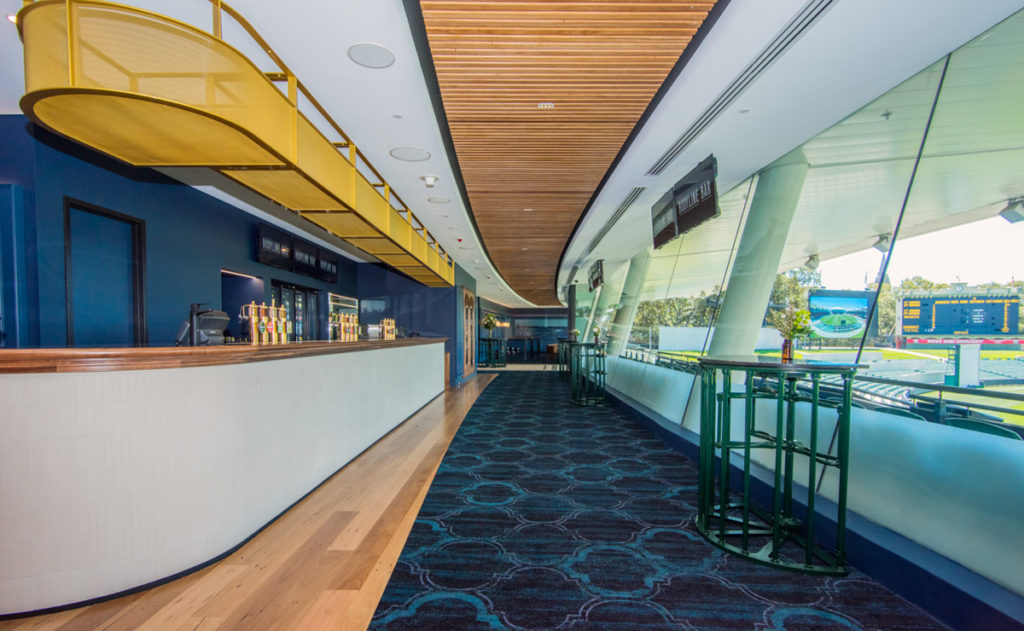
The Bodyline Bar will open on Saturday at the Adelaide Oval to coincide with the first day of the Adelaide Ashes Test – the first to be played in a day/night format.

The bar is in the western members stand at Adelaide Oval, which was also the site of the bloody third match of the 1932-33 Bodyline series between Australia and England. It features a range of memorabilia from the Bodyline series and is designed to capture the feel of a bygone era.

A $535 million redevelopment of Adelaide Oval was completed in 2014 and transformed the historic oval into a world-class stadium.

South Australian Cricket Association President Andrew Sinclair says planning for the Bodyline Bar began in 2012 and the space set aside soon after but it had taken longer than expected to come to fruition. However, he says its opening to coincide with day one of the first day/night Ashes test was ideal.

“The quality of the fit out is top notch with a view towards trying to create the ambience of a Long Room at the MCG or Lords,” SACA President Andrew Sinclair says.

“The Adelaide Oval has a lot of corporate suites but it doesn’t have a room that really recognises the history of Adelaide Oval and that’s what this is about.

“Part of the reason the redevelopment has been so successful is because it has an eye on the history of Adelaide Oval – we’ve kept the scoreboard and the hill and I think this (bar) is the same. Adelaide Oval and the Bodyline Series seem to go hand in hand when you talk cricket so it was an opportunity to say ‘why don’t we celebrate that’.”

Day two of the third test at Adelaide Oval in 1933 was possibly the single most intense day of the infamous Bodyline series. The Australian batsmen, including Sir Donald Bradman faced a barrage of short-pitched bowling and when captain Bill Woodfull was struck in the heart by a ball from Harold Larwood, police lined the boundary in preparation for a riot.

The riot never eventuated but a guard armed with a rifle was posted to the Adelaide Oval pitch each night of the match amid fears the irate public would dig up the wicket. His rifle is now on display in the Bodyline bar.

Other items in the bar include Clarrie Grimmett’s full playing outfit, a bat signed by both Bodyline sides and the clock that overlooked the ground in 1933 from the top of the members stand.

Tables in the bar have been fashioned from the turnstiles that let fans into the ground from 1880 to the early 2000s and three televisions will show highlights from the Bodyline series while a speaker plays radio commentary from 1933.

The walls feature large images of 17 of the players who took part in the game, including Bradman, Woodfull, Victor Richardson, Grimmett and Bert Oldfield and England’s Douglas Jardine, Larwood and Wally Hammond. The images and their accompanying descriptions were taken from cricket cards included in cigarette packs in 1933.

It is believed to be the only bar in the world that celebrates the sport’s most infamous series between its fiercest rivals. Bodyline was a tactic used by England whereby its pace bowlers aimed short-pitched deliveries at the upper bodies of Australian batsmen and placed the field accordingly. It ultimately led to a change to the laws of cricket in 1935, which effectively outlawed the practice.

The 210-person capacity bar is set to be a permanent fixture at Adelaide Oval during cricket and football seasons. Like several other rooms in the ground, it is also available to be hired out for private functions such as birthday parties when matches are not in progress.

Sinclair says the wood floors and joinery and the brass beer tap fittings were all designed to give the room a sense of grandeur.

“It’s trying to recognise the history of the most historic Test match ever played at the Adelaide Oval and I hope it’s there for a long time.”

Despite the bar not being open yet, SACA members are already voting with their feet. A ballot system was used to grant access to the Bodyline Bar during the upcoming test and all 15 sessions are booked out.

Coincidentally, the record for the biggest test match cricket attendance at Adelaide Oval – 50,962 – was set during the Bodyline Test in 1933. That record is expected to be broken this weekend. The Bodyline Test also holds the Adelaide Oval attendance record of 172,361 across the five days of a test.

Port Lincoln’s southern bluefin tuna is nation’s greatest seafood success story

Ask South Australian seafood industry spokesman Brian Jeffriess AM to describe the taste of a high quality southern bluefin tuna (SBT) and he struggles to find the words.

“It’s a spiritual experience – it’s that good,” he says.

After 30 years in Port Lincoln’s SBT industry, Brian’s fascination with the saltwater giants is yet to wear off and probably never will.

“Tuna must move one body length – an average of one metre – per second for 24 hours a day to wash enough oxygen over their gills to survive,” says the CEO of the Australian SBT Industry Association.

“It’s a very robust fish and we are lucky enough to have a top-class product here in SA.”

Brian Jeffriess, left, has been in the southern bluefin tuna industry for 30 years, watching the industry become a national success story.

SBT is SA’s largest single aquaculture product, with an overseas export worth $126m.

As the Eyre Peninsula’s most renowned seafood product, SBT is a large, red fleshed, sashimi grade fish that is highly sought after by the Japanese market.

It hasn’t always been smooth sailing for the Port Lincoln industry, which almost collapsed in the 1980s when the wild catch quota was cut by nearly 70%.

This caused major industry disruption, sending several local fisherman into receivership.

In 1988 Brian, a commodities specialist, was brought in to head the SBT Tuna Industry Association to help turn the fortunes around.

Southern bluefin tuna is a premium product on the Japanese sashimi market.

He came with vast business experience including various roles within the Department of Trade and Industry in Canberra, the OECD in Paris, and Mitsubishi Motors.

“In 1989 we decided to try this dream idea of tuna farming, no one had done it in the world but it was either that or bankruptcy,” Brian says.

“People never thought it would work, but there’s something in the DNA of Port Lincoln …”

SBT farming began in 1991 and was pioneered by first generation immigrants – most notably late Croatian Dinko Lukin.

Their innovative inventions saved the seaside town.

Southern bluefin tuna farm pontoons off Port Lincoln.

Now SBT is farmed by fishers who travel out to the Great Australian Bight and catch the species in a purse seine (net).

The fish are then carefully towed to ranching pontoons off Port Lincoln and fed sardines to aid further growth.

The sardine catch used to feed the tuna is the largest tonnage fishery in Australia.

“When the tuna are captured in the wild they weigh about 17kg each … they are towed to the pontoon over 15 days at one knot,” Brian says.

“The tuna mortality rate used to be 14% and now it’s only 1%.

“We taught the rest of the world to do it and we’ve gradually refined the process over the past 20 years.”

Once grown, 90% of the harvested tuna is frozen, while the other 10% is chilled and airfreighted.

Tuna rosettes at the Port Lincoln Hotel.

While more than 90% of SA’s SBT is exported to Japan, Brian says the domestic market is growing.

“The overall tuna industry is worth $400m and that’s understating it,” he says.

“The footprint of the industry on the Eyre Peninsula surprises even me.”

Living in Adelaide and travelling to Port Lincoln weekly, Brian was awarded Member of the Order of Australia for his contribution to the fishing and aquaculture industries.

He says there’s no better place to enjoy the fruits of the sea than the Eyre Peninsula.

“The whole natural environment, the beauty of the place and the climate is superb,” Brian says.

“Adelaide and Port Lincoln are very rare places in the world, there’s nothing in any European city like them.

“It’s as good as it gets.”

Country girl at heart headed to Paris Fashion Week

The rickety windmills and rolling tumbleweeds of Mundoora in South Australia’s Mid North are a far cry from the thumping catwalks at Paris Fashion Week.

But a 22-year-old emerging designer from the small country town, 21km from Port Broughton, will debut her label Dark Thorn Clothing in the fashion capital in 2018.

Oxford Fashion Studio invited Tori-Anne Gill to showcase her collection on an independent runway coinciding with one of the world’s biggest couture events – Paris Fashion Week.

Oxford and its team of curators review 40,000 designers every year and invite a select few to appear on the runway of one of the world’s four biggest fashion shows.

Tori-Anne wearing her own Dakr Thorn designs.

Tori-Anne wearing her own Dark Thorn designs.

Tori-Anne says she is “nervous but excited” to travel to Paris to showcase her collection Highland featuring edgy yet romantic designs.

“It hasn’t really hit me yet,” she says.

“It feels like it’s not real.”

Tori-Anne created Dark Thorn Clothing four years ago in a shed-turned-studio in the back paddock of her parents’ farm.

In August 2017, she was travelling in Europe when she received an invitation from Oxford inviting her to debut at Milan Fashion Week.

But with only a month or so to prepare she declined the offer and shifted the invitation to Paris, 2018.

A model wears Dark Thorn pieces designed from the small country town of Mundoora in SA's Mid North.

A model wears Dark Thorn pieces designed from the small country town of Mundoora in SA’s Mid North. PHOTO: Magic Memories by Erika.

Designing the pieces from Mundoora, Tori-Anne sends the Victorian era-inspired designs to her Sydney pattern maker and seamstress.

“I design and pick out the embellishments and fabric selection from Australian wholesalers,” she says.

“I like to stick with wools and silk.

“The garments are sent back to me and I quality control them to make sure they’re all perfect.”

Dark Thorn Clothing is inspired by the Victorian-era.

Dark Thorn Clothing is inspired by the Victorian-era. PHOTO: Magic Memories by Erika.

Tori-Anne describes Dark Thorn as “dark, romantic and mystical” and says 75% of her customers are from the UK and US.

“Australians have a different fashion sense to Europeans who like more elaborate clothing,” she says.

When she’s not designing garments, Tori-Anne is helping her parents on the farm by cleaning sheep troughs or moving machinery.

“I usually dress in daggy clothes, jeans, boots and an Akubra,” she says.

“I’m pretty confident I don’t want to move anywhere else.

“I think the key is to stay true to yourself … it will set you apart from the rest.”

Tori-Anne has launched a GoFundMe campaign in hope of securing $30,000 to put towards runway fees, photography, models and showroom costs.

To help out visit the GoFundMe page.

Like this story? Nominate a story from your region.
Click here to nominate >>

These inspiring regional stories made possible by:

Major Partner[logooos_saved id=”5491″]Program Partners[logooos_saved id=”17589″]Major Media Partner[logooos_saved id=”5506″]

Top 7 local designers to hunt down at Bowerbird Design Market

The Bowerbird Design Market kicks off tomorrow and will see more than 170 independent creatives, designers and craftspeople spread their wares across the Adelaide Showground.

From locally made homewares, jewellery, art and ceramics, we’ve picked out seven SA stalls worth a stop.

Three day festival, running from November 24–26, allows shoppers to meet the makers while enjoying local, artisan eats and beverages.

When: Friday, November 24, 4pm–9pm. Saturday, November 25 and Sunday 26 November, 10am–5pm.

Where: Adelaide Showground, Wayville Pavilion.

Cost: Adults $5, children (12 and under) free.

1. The Butcher Byrd
There’s nothing more nostalgic than the smell of that battered but as soft as butter leather handbag you’ve had for years.

These totes and satchels are designed, drafted, cut, sewn and finished at an Adelaide workshop converted from an old butcher’s shop.

A post shared by Sasha Carroll (@thebutcherbyrd) on

//platform.instagram.com/en_US/embeds.js2. Dana Kinter Art With a Gorman collaboration under her belt, Dana is one to watch on the SA fashion scene.

The Fleurieu Peninsula designer has now collaborated with Goolwa design house Kitty Came Home on a cute range of bi-fold clutches.

A post shared by dana kinter (@danakinter) on

//platform.instagram.com/en_US/embeds.js

3. WineStains
Based in the Barossa Valley, WineStains make homewares out of recycled wine barrels.

From cheeseboards, to coasters, wine racks and breakfast trays, these beautifully crafted pieces feature unique markings and wine stains.

PHOTO: Zoe Campbell Photography & Design.

PHOTO: Zoe Campbell Photography & Design.

4. Etikette Candles
A candle featuring a blend of fruits, spices and a hint of brandy sauce? It’s the Lobethal Christmas Lights all over.

These beautiful hand poured soy wax candles will make you swoon with scents inspired by areas of SA – including the Fleurieu and Yorke peninsulas.

5. Georgia Walker Designs 
What is the festive season without a ‘cha cha’ earring? Adelaide-based Georgia Walker is your go-to girl.

These swinging creations are big, bold and “the best fun your ears can have”.

A post shared by @georgiawalkerdesigns on

//platform.instagram.com/en_US/embeds.js6. Truth Cosmetics

Nothing but the truth is what you’ll get with this natural cosmetics line formulated and manufactured in SA.

Truth products contain all the yummy stuff – macadamia, jojoba, rice bran oil and shea butter blended with essential oils and extracts – and no nasties.

PHOTO: Truth Cosmetics Australia Facebook.

PHOTO: Truth Cosmetics Australia Facebook.

7. Rhicreative Stationery nerds will love this boutique range of greeting cards, calendars, gift wrap, art prints and well … stationery.

Designed and produced on 100% recycled material by Adelaidian Rhiannon Clohesy, these stationery pieces will dress up Christmas pressies so they’re almost too good to unwrap.

A post shared by Rhicreative (@rhicreative) on

//platform.instagram.com/en_US/embeds.js

We’d love you to share your own local purchases with us on Facebook #ichoosesa

Visit I Choose SA to find out how you can support our State by choosing South Australian businesses, products and services.

[logooos_saved id=”13411″]

Inside the life of SA’s veteran abalone diver

It’s cold, there’s no other boat in sight, and you’re battling swells 18m below the ocean.

For 63-year-old veteran wild catch abalone diver, Rex Bichard, this has been an ordinary day at work for 40 years.

The Port Lincoln local, who is the South Australian abalone industry’s oldest diver, spends seven hours a day prising the underwater delicacies from rocks in the seas off the state’s West Coast.

“It’s a different world down there,” he says.

“You’re in your own mind all day, but on the flip side, you don’t have to see anyone and you’re the boss.”

More than 600 tonnes of abalone – prized by fine restaurants and Asian countries – are produced in SA each year and exported globally.

Generating $22m for the state, it’s one of SA’s most lucrative seafood markets.

Rex wears a chain mail suit to

Rex with his abalone ‘iron’ and wearing his chain mail suit, which protects from shark bites.

Rex dives 12-18m into the deep, cold waters to collect three abalone species; greenlip, blacklip and roei.

Wearing a heavy, stainless steel chain mail suit, to protect from shark bites and keep him on the ocean floor, he uses an abalone ‘iron’ to lift the shellfish from the rocks.

Once collected in his bag, the catch is parachuted to the surface and collected by Rex’s on-deck sheller and brother-in-law Darryl Carrison.

Aside from shucking and icing the abalone meat, Darryl is also responsible for operating the boat.

“We never use an anchor, so the sheller follows the diver’s every move,” Rex says.

“The sheller always has to pay attention.”

Adhering to annual catch quotas, Rex says 150kg of abalone meat is a “good day” at sea.

His catches are delivered to Port Lincoln co-operative Western Abalone which exports mainly to Asian markets while the rest is sent to high-end Australian restaurants.

“Abalone is like a snail that moves around and forages for food,” Rex says.

“They strike on (the rock) with about 300 pounds of pressure per square inch so hopefully you get them before they latch down hard.”

Rex’s love for seafood has been inherited by his two daughters, Amanda and Nicole, who are active in the abalone industry.

Abalone dishes are prized by fine restaurants in Australian capital cities and in Asia.

Abalone dishes are highly valued by fine restaurants in Australian capital cities and in Asia.

After countless hours in the ocean, Rex has found “not much treasure but some peculiar fish”.

Among those less peculiar and more fearsome is one of the ocean’s top predators – the great white shark.

Over the years Rex has been in the underwater path of four of them and knew friends who lost their lives to the notorious species.

“They are a wild card and always a worry,” he says.

“The key is to never turn your back on them, it’s all in the body language.”

Rex, originally from the UK, settled in Port Lincoln as a young boy in the 1960s.

After completing an economics degree and becoming an accountant for a year, he decided his “heart wasn’t in it”.

“I got a job as an abalone sheller in 1975 and I’ve been in the game ever since,” he says.

“Port Lincoln is a great place to live and when I work I like to be by myself.

“I don’t see another boat on the horizon.”

Like this story? Nominate a story from your region.
Click here to nominate >>

These inspiring regional stories made possible by:

Major Partner[logooos_saved id=”5491″]Program Partners[logooos_saved id=”17589″]Major Media Partner[logooos_saved id=”5506″]