Adelaide a ‘vibrant market for airlines’

The striking facade of the new $50 million Atura Airport Hotel, rising proudly next to the arrival plaza, is just the first sign that much is changing at Adelaide Airport – and further expansion is set to take off.

Construction company Watpac has commenced a $165 million transformation of the airport terminal, scheduled for completion by 2021, which will double international arrival and departure areas, and increase the airport’s dining and retail precinct by 80%.

This is growth that reflects a stimulated business environment that has taken root in South Australia, and Adelaide Airport managing director Mark Young is confident that this positive energy will keep escalating.

“The airport management has been busy for the past decade promoting SA’s image – as a place to visit, to study, to live, to do business and trade,” says Mark.

“It takes time for that to gain traction, but we’re seeing the results of all that promotional work, and now we need to expand the airport to accommodate it properly.”

Since Adelaide’s current airport terminal opened in 2005, growth has been significant and swift. Adelaide Airport now processes more than eight million passengers a year, a rise of almost 50% in a decade, with one million being international passengers – the consequence of being able to fly non-stop from Adelaide to nine international locations, which connect to more than 300 cities.

However, the increased number of international fights is only partially tied to passenger growth. The lynchpin is increased freight traffic – both for imports, and for exported luxury goods, especially SA’s legion of premium foods.

“Expansion is tied directly to SA business,” says Mark. “It’s the freight volume more than passenger numbers that shows this state as being a vibrant market for airlines, and Adelaide is now directly connected to some of the biggest trade distribution hubs in the world – Dubai, Qatar, Guangzhou – through Adelaide Airport.”

Access to South China is a current focus of increased flight activity, but smaller markets are also expanding. Fiji Air is bringing larger aircraft into Adelaide, and will be scheduling more flights.

An artist’s impression of the transformations at Adelaide Airport.

“Sure, some partnerships are building from a small base, but these form important parts of a bigger picture,” says Mark. “It’s not our aim to cannibalise existing routes and airlines, but to achieve strategic growth through reaching out to new markets.”

This includes talking with airline carriers about a possible direct route to America’s west coast – but Mark concedes that this won’t happen in a hurry.

“It took seven years of negotiation with Emirates before its route and flights to Adelaide were confirmed. It will be a similar long process of continual discussion regarding a route to the US, but I believe it is moving forward,” he says. “It’s a way off, but we believe that the market for such flights is there, and our marketing efforts have commenced.”

Such ambition to pursue vigorous expansion puts existing Adelaide Airport facilities under hard scrutiny. Acknowledging that the current international arrivals hall has inefficiencies at peak times, Mark says the new construction work – ironically located where Adelaide Airport’s 1980s international arrivals shed once stood – will double current capacity, with provision for infrastructure to double again.

International upgrades will include a second, longer baggage belt for arrivals, more space for emigration and immigration processing, expanded security screening, a larger duty free precinct for arrivals and departures, and an expanded dining and retail precinct that will add an estimated 600 retail jobs.

An artist’s impression of the larger duty free precinct at Adelaide Airport.

Other improvements that will soon be taking shape in the airport terminal will include a new premium international lounge and dedicated VIP facilities, along with a relocation of the Virgin Australia Lounge.

The first sign of progress in this big airport transformation was the opening in September 2018 of the seven-story, 165-room Atura Hotel abutting the terminal.

It allows hotel guests to check out and proceed straight to their flight through a direct level-two connection into the airport’s check-in counters. Such an improvement not only accommodates the current needs of travellers, but also serves as a necessary springboard to further growth, and sends a powerful signal to the rest of the nation that Adelaide is a destination on the rise.

“While we still have sufficient capacity to meet future forecasted growth in the number of flights coming to Adelaide, we’re quickly reaching capacity within the existing terminal, and we know there’s potential for more growth,” says Mark.

There are 1.4 million South Australians travelling overseas each year, so about 30% of these people are currently flying out from other Australian cities, and with more flight options we will see that more of these people can be travelling directly from Adelaide.

“The growth in Adelaide Airport is a signal to the state,” Mark says. “It builds confidence in who we are and what we do – and it’s all moving forward.”

Industry in focus: Trade and Investment

Throughout the months of January and February, the state’s trade and investment industry will be explored as part of I Choose SA.

South Australia is in a prime position for trade and investment opportunities as we have a 24-hour connection to international markets and a prime reputation for our premium products and services.  Read more trade and investment stories here.

Visit I Choose SA to meet the people building business and industry in SA, and to find out how your choices make a difference to our state.

[logooos_saved id=”13411″]

[logooos_saved id=”35109″]

How to make the most of a South Australian summer

There are some things about summer that only Aussies will understand. Thongs sticking to the bitumen, seatbelt burns, cricket taking over the telly and sprinklers on the lawn.

But reside in South Australia in summer and you’ll notice several unique ways we like to spend our days as the thermometer climbs.

From dropping a line off the jetty to crunching through a Giant Twin ice cream and flinging a giant plastic tuna along the Port Lincoln foreshore, here’s 11 of the best ways to make the most of the warmer months in SA.

1. Eat bucketloads of cherries

Arguably the best fruit on earth. Try and eat only a handful and before you know it the whole box is gone and your lips are stained purple. Cherry season is mid-November to mid-January. The Adelaide Hills, Riverland and South East are SA’s cherry growing regions, however, the majority of the crop comes from the Hills’ sub-regions of Montacute, Cherryville (how fitting), Norton Summit, Basket Range, Summertown, Uraidla, Forest Range, Lenswood, Kenton Valley and Gumeracha. If you’re in Mclaren Vale area be sure to stop by Fleurieu Cherries five minutes from Willunga. Although, be quick! The season is nearing its end.

Editor’s note January 17: It’s quite possible that the fattest, roundest cherries (almost the size of small plums) can be found this week at the Adelaide Central Market.

Photo by SATC/Adam Bruzzone.

2. Spend a day at the beach

Pristine, stunning, paradise – these words are overused when it comes to beaches, but there’s no truer description for many of SA’s coastal havens.

Metropolitan beaches Glenelg, Henley Beach, Semaphore, Grange and Brighton are always hives of activity, while Port Noarlunga, Christies Beach, Moana and Maslin are good for those located further south of the city.

While all the cosmopolitan action is at our metro beaches, you’ll find more quiet stretches of sand on Kangaroo Island, along the Yorke and Eyre peninsulas and at Limestone Coast towns of Robe and Beachport.

Top picks include Memory Cove in the Lincoln National Park on the Eyre Peninsula and Cap Clairout near Corny Point on the foot of the Yorkes.

Beachport in the state’s South East. Photo by Mark Fitzpatrick.

3. It’s all about the ice cream 

Whether it’s straight out the tub or on a stick, ice cream is a summer necessity. SA is home to a few of the best makers including local icon Golden North, which has been producing the sweet stuff at Laura in the Mid North for the past 90 years. A true South Aussie would have a tub stashed in the freezer or a box of Giant Twins on hand at all times.

If gelati is more your style, look out for Gelista. These guys are artisan-style, handmade gelato pros, with flavours such as almond and quandong, apple pie, macadamia and Kangaroo Island honey, and wattleseed rocher.

4. Toss a tuna

Port Lincoln on the Eyre Peninsula is home to the famous tuna toss event otherwise known as Tunarama Festival. Held at the Port Lincoln foreshore over the Australia Day long weekend, Tunarama has a long history dating back to 1962.

The highlight of the event is the tuna toss, where competitors hurl a 10kg polyurethane tuna replica as far as they can. The world record is 37.23m set by former Olympic hammer thrower Sean Carlin in 1998.

Tunarama Festival is a great family day out, with a number of other competitions and attractions including the boat building competition, a beach bod competition, the prawn toss, prawn peeling competition, beer keg roll, fireworks, markets and displays.

5. Catch a whopper

Blue swimmer crabs, garfish, squid and Tommy ruff are popular catches from SA jetties. Head to Port Germein on the Yorke Peninsula to find SA’s longest jetty, stretching about 1.5km.

Beach and boat fishing make a good day out and can provide hauls of King George whiting, squid, flathead and snapper (check for specific snapper closures).

Freshwater fish such as callop, redfin and yabbies can be found in the mighty Murray River.

Caurnamont near Mannum on the Murray River. Photo by John Montesi.

6. Check out the silo art

Giant artworks splashed across grain silos can be found in various regional towns across the state. Waikerie in the Riverland is the latest town to welcome the impressive artworks, which include a huge parrot and yabby splashed across the silos. You’ll also find silo art at Coonalpyn, Kimba, Wirrabara and Tumby Bay. Take a road trip!

The Tumby Bay silos. Photo by Robert Lang Photography.

7. Follow the peloton

Australia’s biggest cycling race takes over our streets from January 15 – 20 as the world’s best cyclists whizz through stages in Adelaide, the Barossa Valley, Adelaide Hills and McLaren Vale. The exhilarating race brings thousands of spectators to roadsides to take in the action. The event is also a huge benefit for our economy, with last year’s event injecting $63.7 million into the state.

Tour Down Under cyclists speed along King William Street in 2018. Photo: SATC.

8. Jump into Fringe action

Australia’s largest open access arts festival Adelaide Fringe swings into gear from February 15 – March 17. With it brings some of Australia’s – and the world’s – best comedians, circus performers, musicians and actors. The Garden of Unearthly Delights and Gluttony are central Fringe hubs bustling with colour, lights, good food and a whole lot of entertainment. But other venues are also spread throughout Adelaide and some regional areas in pubs, small performance spaces, theatres, wineries, galleries and town halls.

The crowd at Adelaide Fringe venue hub, Gluttony. Photo by Helen Page.

9. Float down the Torrens on The Popeye 

Long considered a treasured family outing, the Popeye boat that floats along the River Torrens between Elder Park and Adelaide Zoo recently took a new lease on life.

New branding was adopted in 2018 and the Popeye began attracting a new generation of passengers when it introduced gin masterclasses aboard with Prohibition Liquor Co. Popeye also hosts functions, parties and high teas. The original Popeye was launched on the Torrens in 1935 – so it’s a longstanding tradition that every Adelaidean should experience at least once!

High tea aboard The Popeye. Photo: Popeye and Paddle Boats on the Torrens River Facebook.

10. Head to a rooftop bar

There is something about rooftops that make drinks taste better. Sip on a gin and tonic while soaking in the sights from eight storeys high at 2KW Bar and Restaurant on King William Street in the CBD. Another top spot is Hennessy Rooftop Bar at The Mayfair, The Gallery on Waymouth Street and Rocket bar and Rooftop.

If a relaxing Sunday arvo cider is what’s needed, then beer gardens are also good places to be in summer. We’ve done the hard work for you and picked out eight of the best beer gardens here.

Impressive views of Adelaide from 2KW Bar and Restaurant. Photo: SATC.

11. Go brewery browsing

Remember when you cradled a glass of shiraz by the fire last winter? Well, now it’s time to clutch a cold pale ale under the air-con instead.

There is a brewery in just about every region, from Beer Garden Brewing in Port Lincoln to Smiling Samoyed at Myponga, and Lobethal Bierhaus in the Adelaide Hills.

Many of our craft brewers are producing award-winning froths, some with quirky flavours such as oysters, strawberries, cherry, milkshake, and even bacon. Yep, bacon. Don’t forget our longstanding big players. SA is also home to legendary breweries Coopers and West End.

The deck at the Wilkadene Woolshed Brewery in the Riverland overlooks the Murray River.

Visit I Choose SA to meet the people building business and industry in SA, and to find out how your choices make a difference to our state.

[logooos_saved id=”13411″]

Harbour Bottling enters new export markets as love for SA wine grows

A growing taste for South Australian wine overseas has led to a boost in business and new export markets for an Osborne bottling plant.

Wine export business Harbour Bottling, located near Adelaide’s major shipping container port, began exporting wine to India, the UK and Canada last year, on top of its usual trade to China.

Previously, all its products were exported to China – a market that Harbour Bottling director Wayne Chao says is also continuing its love for SA wine.

“Because of the nature of our clients, 100% of our products went to China, but since last year we started our first export to India and since late last year we are going to the UK and Canada,” he says. “So we are now opening more doors for exporting to different countries.”

AWTE Enterprise is the company behind Harbour Bottling, which provides contract wine bottling, packaging, warehousing and exporting services to the wine industry.

Harbour Bottling processes about 4000 wine bottles an hour.

The bottling plant, the only of its kind in Australia located so close to an export hub, produces about 4000 bottles an hour, equating to an average of 40,000 bottles a day.

The facility has a capacity to fill 600 shipping containers a year, a limit Wayne says is expected to be reached within the next two years, prompting plans for a second production line and a possible relocation of the business in the area.

“Last calendar year we produced more than five million bottles, that’s about 400 containers a year,” he says.

“Our bottling line capacity is about 600 containers (a year) so with the increasing trend of orders, we are about to reach our limit in maybe the next 12–24 months.”

According to Wine Australia’s export statistics from 12 months to September 2018, SA exported 408 million litres of wine, a 7% increase on the previous year.

SA’s wine export value was also up by 15% on the previous year at $1.67 billion. SA’s top export market by value and volume was China, followed by the UK.

Wayne says he believes the China-Australia Free Trade Agreement (ChAFTA) entered in 2015 has made “quite a bit of difference” to the wine trading market.

“In the past three years our business has been growing by about 30–40% every year. For us that’s a big increase and I think it’s definitely a benefit of the ChAFTA,” he says.

In January this year import tariffs on Australian bottled wines to China were abolished, meaning more wine is expected to make its way to the east Asian country.

Habour Bottling was established in 2017 by four Chinese entrepreneurs to help cater for Chinese demand for Aussie wine. Directors Jason Zhao, Jonathon Li, Simon Hou and Wayne Chao had each pursued different study and career pathways, including winemaking, computer science, media, medical science, real estate, civil engineering and wine exporting, before launching their business venture.

AWTE Enterprise and Harbour Bottling director Wayne Chao.

Together they saw a gap in the market for a “one-stop wine exporting logistics solution”. They were fond of Adelaide’s lifestyle offerings and the state’s world-class wine regions.

“We saw the opportunity in wine exporting. SA has many world-class wine regions that produce a lot of wine,” Wayne says.  “Australian wine has been a growing market in China, especially in the last couple of years. It’s a booming business.”

Harbour Bottling’s major client is Orchid Wine Estate – owned by Jonathon Li and Jason Zhao – which exports about 200 containers a year. Harbour Bottling works with local producers and wine brands from various leading wine regions across SA.

One of Harbour Bottling’s four directors Simon Hou recently stepped away from the business after being elected as an Adelaide City Councillor and taking on an extra workload.

Industry in focus: Trade and Investment

Throughout the months of January and February, the state’s trade and investment industry will be explored as part of I Choose SA.

South Australia is in a prime position for trade and investment opportunities as we have a 24-hour connection to international markets and a prime reputation for our premium products and services.  Read more trade and investment stories here.

Visit I Choose SA to meet the people building business and industry in SA, and to find out how your choices make a difference to our state.

[logooos_saved id=”13411″]

[logooos_saved id=”35109″]

‘I’m grateful to be alive’: Tanunda mum drives organ donation awareness

While most people spend their 20s navigating their way through the first stages of adulthood, Barossa Valley woman Megan McLoughlin once feared she would never live to see 30.

In 2010 at the age of 29, she was suffering from acute renal failure and was given just three weeks to live.

In desperate need of a lifesaving kidney-pancreas transplant Megan was preparing for the end, and heartbreakingly, began planning her own funeral.

Thankfully, Megan was given a second chance at life through the gift of organ donation. Now, almost a decade later, the Tanunda mother-of-two who is also legally blind has made it her mission to help support regionally-based organ donor families and transplant recipients.

She established charity Herd of Hope in 2016, promoting organ donation along with the need for greater support and services for transplant recipients and bereaved donor families in country areas.

Megan’s efforts have led to her being named the 2019 SA Local Hero, and this month she will travel to Canberra alongside three other SA Australia Day Award recipients vying for the national award.

Not only has her charity work and organ donation awareness inspired many, but so too has her messages of positivity amidst more health setbacks – two cancer diagnoses.

Megan, with son Sam, 4, husband Mark, and daughter Ella, 2. Photo courtesy of Studio Barossa.

“I’m not saying there aren’t times when we get down and think life is really difficult, but you’ll always find a way out of it,” Megan says. “There is a positive every morning when the sun comes up. The day is yours.”

Born with one kidney, Megan was diagnosed with juvenile diabetes at the age of eight. Growing up in the Flinders Ranges she knew too well the challenges of travelling long distances for medical appointments.

In her late 20s, she suffered major complications during eye surgery and became legally blind. Three months later her only kidney began to fail and Megan was given just three weeks to live.

If it weren’t for the kidney-pancreas transplant it’s likely she would have died.

According to Donate Life, more than 1400 Australians are currently waiting for organ transplants, which can include lungs, heart, kidney, liver and pancreas as well as tissues, bone and skin.

South Australians can state their intention to be an organ donor on their driver’s license, however, in the event of a person’s death, their family can still have the final say.

Herd of Hope says in 2017 only 44% of families who were unaware of their loved one’s intention to be an organ donor upheld their wishes.

Megan’s friend and Herd of Hope executive Annie Allert encourages all Australians to speak with their family about their organ donation intentions so that if something happened the decision might be “a bit easier” to make.

Megan McLoughlin is the 2019 SA Local Hero. She will travel to Canberra this month for the Australian of the Year Awards.

She also encourages those wishing to donate their organs to join the Australian Organ Donor Register, even if their driver’s licence states their intention.

“It simply takes one minute,” Annie says.

“Your family can still contest it (the decision), but the national registration just makes it a bit easier … it’s less of a burden. We encourage people to have that conversation with their family.”

Through Herd of Hope, Megan has met many inspiring organ donor families and fellow transplant recipients and says it’s unfortunate that both groups must co-exist.

“Unfortunately, modern medicine hasn’t advanced to the point where we aren’t reliant on someone passing away to save another’s life,” she says.

“In an average year 53 people pass away while waiting for an organ transplant. That doesn’t seem like a large statistic unless you’re one of them. Organ donation is such a selfless act that can save many lives and the grief of other people.”

Herd of Hope has held many events and initiatives to increase awareness and support services for donor families and transplant recipients in country areas.

In 2018, the charity brought the bush to the beach when a herd of Australian Pol Hereford cattle were mustered onto Sydney’s Bondi Beach, raising funds and awareness for organ donation.

Megan McLoughlin on horse Biscuit during the cattle drive on Bondi Beach.

Herd of Hope has also raised money to help pay for accommodation for regionally-based donor families and families of transplant recipients staying near city hospitals during the transplant process.

One of its latest projects is the Tree of Hope, an emotional tree sculpture featuring hundreds of leaves engraved by bereaved donor families in honour of their loved ones. The tree is touring interstate and will arrive at the Royal Adelaide Hospital later this month before it goes to Perth.

Herd of Hope has also funded a study by the University of South Australia into the impact transplant recipients and their carers face when regionally based. In March the charity will attempt to break the world record for the most organ donor registrations received in one hit.

Besides her Herd of Hope work, being a mum to Sam, 4, and Ella, 2, and a wife to Mark, Megan also enjoys riding her horse, Biscuit, and despite her vision impairment competes in the equine sport, barrel racing.

It’s this determination to attack life regardless of her circumstances that makes Megan the true optimist.

“I’m extremely grateful to be here, there’s not a thing I would change about my life,” she says.

“My grandma used to tell me a quote when I was younger, she used to say, ‘I felt sad because I couldn’t afford shoes and then I saw a man with no feet’. That basically sums it up.”

Got a good story idea? Nominate a story from your region.
Click here to nominate >>

These inspiring regional stories are made possible by:

Major Partner[logooos_saved id=”5491″]Program Partners

[logooos_saved id=”29687″]

Boost after buyouts of SA businesses

The recent sale of several high-profile South Australian food and beverage manufacturing companies has presented new growth opportunities due to significant capital injection, without sacrificing the input of local talent and leadership.

Udder Delights Cheese, Pirate Life Brewery and MOJO Kombucha are all now owned by international corporations, but the local entrepreneurs who formed these companies have remained at their helm.

They say new ownership has strengthened these SA-based operations and increased the SA workforce, rather than having enforced changes applied to existing operations.

Udder Delights founder Sheree Sullivan says the Lobethal-based cheese producer has continued to prosper since giant Japanese dairy company Snow Brand purchased a majority shareholding in November 2017.

She underlines that foreign investment has provided an essential platform for growth that most local people don’t realise, while Sheree and her husband Saul have remained in the roles of chief executive and managing director respectively.

Udder Delights is led by Sheree and Saul Sullivan.

“Many people just think we’re sold out, and there has been negative social media messages posted, but these people don’t understand how important it is for SA to have international business investment such as this,” explains Sheree.

“This has ensured that Udder Delights can continue to grow stronger as a SA manufacturer, far beyond what we could invest in the company.”

In the year since the change of ownership, Udder Delights has recorded 35% growth in sales, while $1 million infrastructure improvements have been made at the Lobethal factory in the Adelaide Hills, with another $1 million earmarked for further development in the next few years, based on the Sullivans’ suggestions.

“We continue to put together the vision of what we want the business to look like,” says Sheree.

“We still have ambitions for the company to grow, and Saul is now more focused on product development. Before the sale, he was under too much pressure and had too little free time to think creatively and innovate. Now he has the headspace and motivation to start testing new cheeses again.”

The Udder Delights factory in Lobethal.

The Sullivans say this positive sign emphasises that the new company ownership structure has quickly settled into a productive rhythm and is playing to Udder Delights’ enduring strengths.

“Our investors have seen the value in keeping the entrepreneurs who started this company, because they couldn’t do the same things themselves. They respect our ingenuity and vision,” says Sheree.

“They also understand that we bring experience and knowledge to the new company structure, while they’ve lifted the company’s performance in areas where we didn’t do so well. With the sum of all this, we can see that the company is thriving.”

In September 2018, Willunga husband and wife team Anthony and Sarah Crabb sold their company MOJO Kombucha to Coca-Cola. What started a decade earlier with experimental blobs of bacteria and yeast in their back shed to create an innovative drink that was initially sold at farmers’ markets and health food shops, made the transition to supermarkets.

This saw annual turnover rise to $7 million a year, making it the market leader in kombucha drinks and attracting the attention of Coke.

MOJO CEO and co-founder Anthony Crabb with some of the kombucha products.

While MOJO grew quickly through its initial decade without significant external funding, additional capital was needed for it to remain market leader in this rapidly-expanding drinks sector, and the purchase offer from Coke suited the Crabbs’ purposes perfectly.

“While other investment options had been considered, the proposition by Coke was the most attractive and beneficial,” explains MOJO director of sales and marketing Andrew Buttery.

“It allowed Anthony to continue in his role and run the business from its Willunga base as an independent operation, with the benefit of plugging into Coke’s sales and marketing network. This was the best option to take the business to another level, both nationally and internationally.”

Mojo expects to double its sales volume in 2019 as a consequence of Coke’s reach beyond grocery stores into petrol and convenience stores, and on-premise hospitality venues – all happening from a SA production base.

“The ownership transition has been smooth, albeit going through a steep learning curve,” says Andrew. “The support Anthony is getting from the Coke team has been first class, and we expect a big future.”

From left to right: Co-founder Jack Cameron – Hon. David Ridgway MLC, Minister for Trade, Tourism and Investment – Pirate Life CEO John Phinney – Senior Project Manager Josh Smith from Promanage Australia.

Pirate Life has immediately benefitted since being purchased in November 2018 by Carlton & United Breweries, a subsidiary of Belgium-based international drinks company Anheuser-Busch InBev.

A new $10 million Pirate Life brewery and canning facility is being constructed at Port Adelaide, due to be completed in March. It will enable the popular craft brewer to escalate annual production from about three million litres to about eight million litres, to meet growing national demand.

It also means the company is able to operate two facilities, with its original Hindmarsh brewery now dedicated to creating new beers, including innovative sours and barrel-aged brews.

Pirate Life is expecting continued growth following on from its takeover by Carlton & United Breweries.

Pirate Life co-founder and chief brewer Jared Proudfoot says the sale will enable continued growth for the company that has enjoyed immediate popularity since releasing its first beers in March 2015.

“The reality is we have run out of capacity at Hindmarsh. With this partnership we’re in a fortunate position to upgrade to a new, bigger brewery while dedicating Hindmarsh to innovate and craft a whole range of new styles to make sure we keep pushing the boundaries and evolving.

“Our whole team is sticking around and it’s invaluable for all of us to be able to benefit from the knowledge and skills of some of the best brewers in the world.”

Industry in focus: Trade and Investment

Throughout the months of January and February, the state’s trade and investment industry will be explored as part of I Choose SA.

South Australia is in a prime position for trade and investment opportunities as we have a 24-hour connection to international markets and a prime reputation for our premium products and services.  Read more trade and investment stories here.

Visit I Choose SA to meet the people building business and industry in SA, and to find out how your choices make a difference to our state.

[logooos_saved id=”13411″]

[logooos_saved id=”35109″]

Adelaide to host 2020 Fringe World Congress

Delegates from Fringe festivals across the globe will descend upon Adelaide in 2020 when the city hosts the biennial Fringe World Congress.

The formal gathering of international Fringe representatives, directors and organisers will visit Adelaide during the Adelaide Fringe Festival (February 14 to March 15) to share ideas and network.

It will be the first time since its establishment in 2012 that the World Fringe Congress has been held somewhere in the southern hemisphere, with past gatherings occurring in Edinburgh and Montreal.

Adelaide Fringe, which will celebrate its 60th anniversary in 2020, is the second largest ticketed arts festival in the world after Edinburgh Festival Fringe.

Adelaide Fringe director and CEO Heather Croall says winning the bid to host the World Congress is a major coup for South Australia’s arts community.

“We’re delighted that we’ll be celebrating Adelaide Fringe’s 60th anniversary with the worldwide Fringe family by hosting the congress in 2020,” she says.

A Fringe show promoter in Adelaide’s Garden of Unearthly Delights. Photo by Trentino Priori.

“The congress will be a great platform for our festival to increase its international exposure while also raising the profile of SA as an arts destination.

“Adelaide Fringe is the party that defines our city and we want everyone to be able to experience the festival’s vibrancy and transformative power for themselves.”

World Fringe managing director Holly Lombardo says she is delighted the next congress will be held in Adelaide.

“This will be the fifth global meet of Fringe directors like this, and after destinations like Edinburgh and Montreal it is right and fitting that it’s going to the southern hemisphere – especially for Adelaide Fringe’s 60th,” she says.

“I know Adelaide Fringe will be perfect hosts for such a wonderful conference of international Fringes and I look forward to being part of it.”

Last year’s Adelaide Fringe was a record breaker with artists selling 705,761 tickets worth $16.6 million. More than $15 million landed directly into the pockets of artists and venues, thanks to the abolishment of inside charges.

Adelaide Fringe also attracted more than 20,000 interstate and international visitors last year, up 8% on 2017, delivering $29.5 million for the state. Gross expenditure related to the 2018 Fringe hit a record $90.6 million.

Click here to view the 2019 Adelaide Fringe guide.

Header photo by Tony Virgo features the Fringe Wives Club.

Adelaide-built Brabham BT62 to hit the streets for Superloop 500

The Adelaide designed and manufactured supercar Brabham BT62 will be steered through city streets when it features at the Superloop Adelaide 500 next month.

Driven by former Formula 1 driver and multiple Le Mans winner David Brabham, the $1.8 million speed machine will make on-track demonstrations and will also feature in public displays throughout the four-day event.

The Superloop Adelaide 500, from February 28 to March 3, is the largest ticketed domestic motorsport event in Australia and is the first event for the Virgin Australia Supercars Championship.

The Brabham BT62, built to deliver “blistering lap times”, is powered by a Brabham 5.4 litre V8 engine producing 522kW. It also features an aerodynamic package that delivers more than 1200kg of downforce.

Car manufacturing in South Australia was reborn in 2018 with the announcement that legendary automaker Brabham Automotive would build the BT62 in northern Adelaide.

The racetrack-only cars are manufactured in Brabham Automotive’s global headquarters at Edinburgh Parks, 1km from the former Holden plant. The BT62 is limited to only 70 cars in a nod to Brabham Automotive’s 70-year racing heritage.

The $1.8 million Brabham BT62. Photo: Brabham Automotive.

UK-based David Brabham, son of three-time Formula 1 World Champion Sir Jack Brabham, will bring the BT62 to the annual motor racing event in Adelaide, a city once home of the Australian Grand Prix between 1885 and 1995. David competed in the then SA-based Grand Prix in 1990 and 1994.

His father, Sir Jack Brabham died in 2014 and is considered one of Australia’s greatest motor racing legends.

“To drive the BT62 around the Superloop Adelaide 500 street circuit will be a fitting tribute to my father as we celebrate the 60th anniversary of his first Formula 1 World Championship in 1959, and what Brabham Automotive stands for,” David says.

“Alongside our family ties to Australia, the region of SA holds a rich automotive heritage as well as hosting one of the most popular motorsport events in Australia.”

Superloop Adelaide 500 general manager Alistair MacDonald hopes the on-track demonstration will bring a touch of history and the thrill of adrenalin to attendees.

“This is a fantastic opportunity for motorsport fans and those alike to appreciate the power of these race cars as they take to the Superloop Adelaide 500 street circuit,” he says.

“We want to recognise the legacy of the Brabham family and there is nothing more fitting than to host the BT62, a great SA manufacturing story, at the premier motorsport event in its home town.”

The Superloop Adelaide 500 won’t be the first time the BT62 has hit the track in SA. It was tested at Tailem Bend’s The Bend Motorsport Park, a 7.7km track, the world’s second-longest permanent circuit.

The BT62 was also run at the Adelaide Motorsport Festival in December.

Visit I Choose SA to meet the people building business and industry in SA, and to find out how your choices make a difference to our state.

[logooos_saved id=”13411″]

SA film Storm Boy to reach global audiences

It’s the Colin Thiele classic that captured the hearts of a generation and now the story of the loveable boy and his pelican has returned to the big screen.

The much-anticipated re-imagination of the 1964 novel Storm Boy will hit Australian cinemas on January 17, bringing to life the adored tale of the adventurous South Australian boy and his pelican, Mr Percival.

The 2019 Storm Boy will also enjoy international releases across New Zealand, Singapore, Malaysia, Indonesia, the Middle East, Poland, Yugoslavia, Canada and the US.

The last time the Storm Boy story was brought to the screen was in the 1976 film starring Greg Rowe, Peter Cummins and David Gulpilil.

The Coorong region is again the backdrop for the 2019 remake, filmed entirely in SA using a mostly local crew as well as a number of local creative and film industry practitioners.

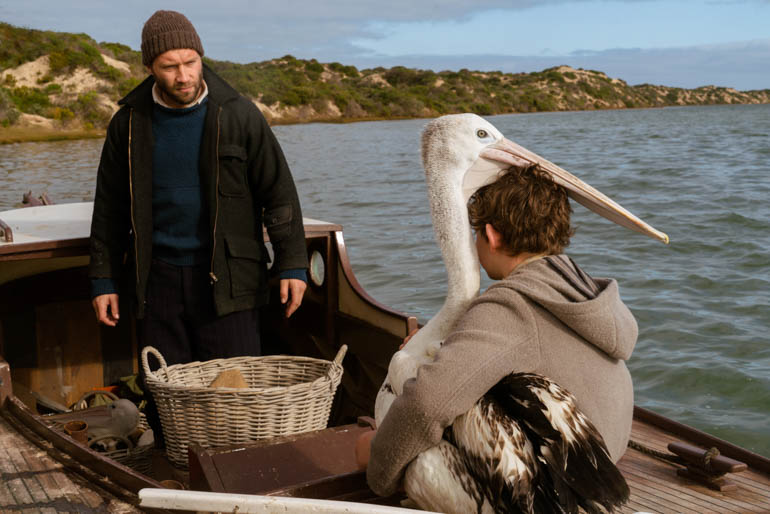
Jai Courtney, left, plays Hideaway Tom, while Finn Little plays the young Michael Kingley, holding Mr Percival.

The contemporary retelling features a grown-up Storm Boy, Michael Kingley (Geoffrey Rush), who has vivid flashbacks of his childhood, centred around his unbreakable friendship with orphaned pelican, Mr Percival.

Michael recounts to his troubled teenage granddaughter Maddie (Morgana Davies) the memories of his loner father Hideaway Tom (Jai Courtney), the friendly Aboriginal man Fingerbone Bill (Trevor Jamieson) and the how they raised three rescued pelicans.

The desolate and rugged coastal landscapes of the Coorong region are stretched across the screen, while the township of Port Elliot also features in the film.

Dramatic yet poignant scenes are complemented by natural recordings of the Coorong environment, and enhanced by pieces performed and recorded by the Adelaide Symphony Orchestra.

The cast and crew were based out of the SA Film Corporation’s (SAFC) Glenside studios, with filming also taking place in the Goolwa area and the Coorong National Park.

Fingerbone Bill (Trevor Jamieson) and the young Michael Kingley.

Storm Boy is an Ambience Entertainment production, with major production investment from Screen Australia in association with the SAFC.  The film’s post production involved the work of Adelaide creative agency KOJO and local VFX company Resin.

Storm Boy was producer Matthew Street’s first feature film shot in SA and he says he would have no hesitation about filming in the state again.

“SA has a highly respected industry with companies like Rising Sun and now Resin, these are world class visual effects companies,” he says.

“The good thing was working with the crew, they were a-list and would match anyone in the world.”

Matthew describes the 2019 Storm Boy as a “proudly South Australian film” and says he and fellow producer Michael Boughen set out to create a contemporary retelling of the classic story that would resonate with new generations and international audiences.

“Our main aim out of the story and the performance is that it would resonate globally. The human story just happens to be set on the Coorong, but it doesn’t matter in what language, it’s a story that should travel.”

Matthew says Storm Boy has brought many economic benefits including short-term business activity for the Fleurieu Peninsula communities during filming.

“We had all those people accommodated down and around the Coorong and Goolwa, so it (the benefits) spilled off into communities and secondary things let alone the tourism benefits nationally and globally for SA.”

As with all remakes and adaptations, the 2019 Storm Boy isn’t immune to the pressure of living up to the emotion, simplicity and beauty of the novel and first movie.

“We had a lot of pressure to make sure this re-imagination was worthy because there’d be a lot of critique beyond just the traditional film critique,” Matthew says.

“We weren’t going to make it unless we could deliver the heart and soul and emotional feeling you get from reading Colin Thiele’s incredible book.”

Storm Boy held its world premiere in Adelaide on January 6. It will be released nationally on January 17. Brand South Australia has teamed up with SONY to give 10 SA families the chance to see the film. Entries close January 14. Click here to enter.

Visit I Choose SA to meet the people building business and industry in SA, and to find out how your choices make a difference to our state.

[logooos_saved id=”13411″]

Community spirit fulfils Waikerie’s nature park dreams

A water and nature play park at Waikerie in South Australia’s Riverland demonstrates how a community can work together to achieve amazing results.

Local couple, Clive and Donna Matthews came up with the idea, after noticing how much their daughters, Evie, 9, and Arlee, 7, enjoyed visiting similar playgrounds in other towns during their caravan holidays.

The Waikerie Water and Nature Play Park blends in with the natural environment and the nearby River Murray.

“We were very specific about this, there is no blue or yellow,” Donna says.

The playground features a flying fox, a teepee, water play features, bench seats made from logs and stones, and a climbing wall. An old boat was donated by local car dealership, Sutton Ford and painted by the Waikerie Men’s Shed.

Waikerie couple Donna and Clive Matthews worked tirelessly to fulfil the community’s dream of a riverfront play park. Photo by Christine Webster

The playground has also been designed so it can be enjoyed when it is too cold for water play.

The park was officially opened on December 22, 2018, to coincide with the summer school holidays and it is already giving local families and tourists much joy.

Donna and Clive realised their dream of creating the park on the Waikerie riverfront had potential when they learned about the SA Government’s former Fund My Neighbourhood Grants (FMN) program.

The couple applied for funding from the program and were delighted to receive $150,000 for the park project.

The public also had to vote online for the project and the strong response from Waikerie residents resulted in the playground being one of the highest voted for projects back in 2017.

Clive says they thought they had hit an obstacle, when they learned they were unable to use the FMN money to apply for any further grants.

Zayn, 5, left, Rino, 4, and Lachlan 4, all of Waikerie try out the water pump for the first time at the official opening in December. Photo by Christine Webster

Parks with water elements require expensive underground works and more money was needed. But the town came to the rescue.

The Rotary Club of Waikerie donated $50,000, the Loxton Waikerie Council provided $30,000 of in-kind support in labour and the Waikerie Apex Club contributed $11,000 to shelters at the park.

Members of the Waikerie community and local businesses also donated a total of $15,000 after Donna set up a Go Fund Me campaign.

Clive, who runs a maintenance and installation business at Waikerie, also saved $30,000 by volunteering his time to project manage the park’s construction.

Donna, who has always been artistic and is a beauty therapist, also wanted to save money on having to engage a professional designer. She designed the play area after many hours of research, which included visiting play parks around Australia.

“Parents with young children worry all the time because the river can be dangerous, but at the park they can still get wet and it’s safe,” Donna says.

Adela Frankel, 8, of Berri, on the teepee, which is the park’s showpiece. Photo by Christine Webster.

Drought and downturns in the citrus and wine industries, which in recent years have begun to perform strongly again, have often left Waikerie struggling to maintain its population and town centre.

Clive and Donna believe the tide is gradually changing with several new businesses opening in recent weeks, with Clive saying tourism is the key.

Since the water and nature play park opened just before Christmas, about 3000 people have paused to enjoy the serenity of the riverfront and try out the playground.

“Waikerie is beginning to change and in the next few years I would love to see it boom,” Clive says.

Loxton Waikerie Mayor Leon Stasinowsky says the park is an example of what the community can achieve by working closely with the council.

“It is something I have always been passionate about,” he adds.

Header image: Photo by SkyTec Media.

 Got a good story idea? Nominate a story from your region.
Click here to nominate >>

These inspiring regional stories are made possible by:

Major Partner[logooos_saved id=”5491″]Program Partners

[logooos_saved id=”29687″]

Port Lincoln cinema saved from closure

When Port Lincoln woman Angela Perin heard that the town’s only cinema would close its doors on December 31 last year she saw an opportunity to save the much-valued community facility.

The Port Lincoln cinema had been run by youth social enterprise, Youthoria, under community organisation West Coast Youth and Community Support (WCYCS) for almost a decade.

But due to a lack of funds, Youthoria announced its looming closure causing disappointment among locals as the next closest cinema is three hours away in Whyalla.

“When the board announced that it was going to close the cinema I hoped that someone would grab it up and give it a new lease on life. But that didn’t appear to be happening and the community was really upset,” Angela says.

“I have two kids, aged 12 and 13, and we can’t imagine the town without a cinema. So I did what I’m always telling others to do and that is do something about it. I had a chat to my family we decided that we’d do it.”

Rudi Perin takes charge of the popcorn machine at the Lincoln Cinema.

As an employee at WCYCS, Angela was familiar with the running of the Youthoria cinema and had worked alongside  the youth group that took over the theatre in 2008.

She is now running the cinema as a family business, purchasing the cinema equipment from Youthoria and leasing the 90-year-old theatre building from the Port Lincoln Council.

On January 3 the movie theatre was revived under a new name, Lincoln Cinema, welcoming 200 movie goers through its doors and continuing the tradition of watching holiday blockbusters on the big screen.

“The community has been so supportive, people have come from Tumby Bay, Cummins and Cleve,” Angela says. “The support has been overwhelming.”

The Lincoln Cinema will close from January 29 until the end of February to undergo minor renovations, with Angela hoping to expand the candy bar to create a more welcoming coffee spot and meeting place for visitors.

The Port Lincoln cinema, originally known as Flinders Picture Theatre, was established in 1929. Photo courtesy of Cinema Treasures, Granola.

She says the cinema is an essential facility for regional youth as it offers them a safe place to meet and socialise.

“Going to the movies is an experience,” she says.

“You can watch movies at home but going to the movies with friends and family and seeing something on the big screen – there’s nothing like it.”

Longstanding SA movie theatre company Wallis Cinemas is the booking agent for Lincoln Cinema, which Angela says will screen some of the summer holiday blockbusters including Mary Poppins Returns.

The movie theatre on Hallett Place in Port Lincoln was established as the Flinders Picture Theatre in 1929 by Mrs R. L. MacGregor.

An article in the Port Lincoln Times newspaper on Friday, September 6, 1929, reports on the ceremony where the foundation stone was laid.

The article states, “It was recognised that a theatre of the class that was being built was essential to the progress of Port Lincoln. The hope was expressed that the venture would prove a success”.

Got a good story idea? Nominate a story from your region.
Click here to nominate >>

These inspiring regional stories are made possible by:

Major Partner[logooos_saved id=”5491″]Program Partners

[logooos_saved id=”29687″]