New wi-fi hotspots connects travellers with our tourism gems

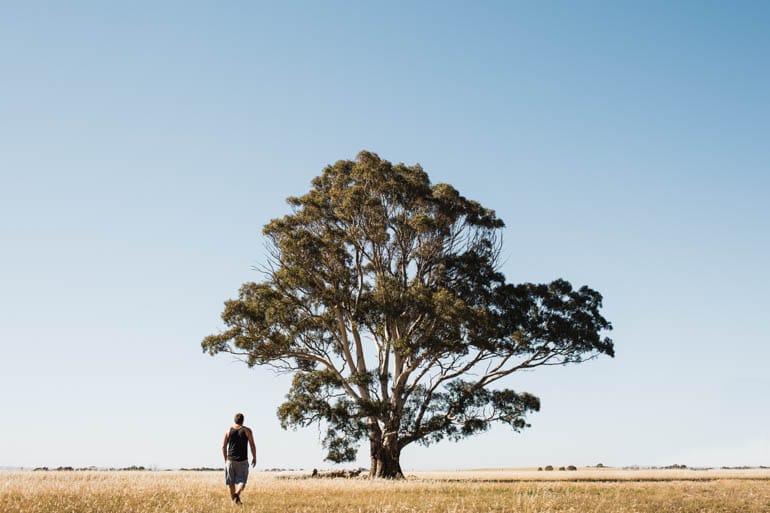
Some of South Australia’s top natural beauties and remote locations have been switched on to a free public wi-fi service encouraging travellers to share their experiences online.

Internet connectivity will be made available in some of the state’s best tourism locations including Wilpena Pound in the Far North, Coffin Bay on the Eyre Peninsula, and Kangaroo Island.

The rollout is an initiative between Telstra and the South Australian Tourism Commission (SATC) and has already been launched in nine of the 60 hotspots including Hahndorf, Moana, Moonta Bay, Angaston, Beachport, Port MacDonnell, Victor Harbor, Tailem Bend and Kingscote.

The connectivity occurs through Telstra Air, Australia’s largest wi-fi network, allowing any mobile phone or device user to access free, unlimited data for up to one hour a day.

The hotspots have a range up to 100m and can be identified by signage which includes instructions on how to connect to the service.

SATC is encouraging visitors and locals using the new wi-fi service to share their travels using #SeeSouthAustralia on social media.

https://platform.twitter.com/widgets.js

SATC chief executive Rodney Harrex says he wants visitors to be “mini-ambassadors” for the state by sharing their trips online.

“A picture is worth a thousand words and #SeeSouthAustralia is quickly becoming a global resource where people plan their holidays, recreate images or share their experiences with their friends,” he says.

Trade, Tourism and Investment Minister David Ridgway says the connectivity will enhance visitor experiences.

“We know people want to be able to locate our restaurants, use maps and share their experiences and happy snaps online, in real time,” he says.

“Technology is transforming tourism and we want to use it to produce social and economic benefits for SA.”

Another 51 spots are set to be rolled out in the coming months and include towns across the Riverland, Fleurieu, Adelaide Hills, McLaren Vale, Limestone Coast, Yorke and Eyre peninsulas and Outback.

TCL adding the art to infrastructure

You might not know their name, but chances are you’ve heard of, seen or even walked along their work.

Taylor Cullity Lethlean (TCL) is a leading Australian landscape architecture firm based in Adelaide and is behind some of the city’s most redefining public settings.

From the city’s heart of Victoria Square/Tarntanyangga to the Riverbank footbridge that connects thousands of sports fans with Adelaide Oval, their work has helped shape the CBD.

TCL’s senior landscape architect Alexandra Lock played a part in both of these landmarks.

But for Alexandra – an I Choose SA ambassador – designing something as significant as the 255m-long footbridge is about much more than getting people from A to B.

“It’s more than just a bridge,” she says.

“We’ve created a space that has become iconic in itself but also speaks to the scale and activity of the city.”

The Riverbank footbridge, completed in 2014, provides a vital connection to the Adelaide Festival Centre, railway station and Adelaide Oval. Its glass cladding, LED lighting and waterfall features make it a showpiece for the River Torrens.

But Alexandra’s portfolio doesn’t stop there.

The 33-year-old has worked on a number of other projects which have gone on to become highly recognised public spaces across Adelaide’s CBD and wider metropolitan areas.

When she joined TCL eight years ago as a graduate landscape architect from the University of Adelaide, her first project involved working on the masterplan and further documentation for the stage one redevelopment of Victoria Square/Tarntanyangga.

TCL senior landscape architect and I Choose SA ambassador Alexandra Lock. Photo by James Knowler / JK+Crew.

The project included an overall greening of the precinct, featuring flexible lawn for major events, extensive urban lounges, water features, and a more vibrant central plaza.

“That was a significant project for the studio but also for Adelaide in general – it is the heart of the city and was the first masterplan to be fully endorsed for the square in 40 years,” Alexandra says.

In 2015, Alex’s work on the redevelopment of another town square 11km from the city in Henley Beach was complete, featuring public furniture, terracing, shade for visitors and a “playful plaza”.

Her work also sprawls across cities and regional areas around the country.

Henley Square.

TCL was born in SA in 1989 and has an office on Grote Street in Adelaide and in Melbourne, employing a complete team of 25 people.

Its name comes from the first letter of the surnames of each of its founders, the late Kevin Taylor, Kate Cullity and Perry Lethlean.

TCL has influenced the design and layout of national parks, wetlands and gardens across the country, and also works on projects overseas.

Its local portfolio includes a collection of infrastructure, urban design and residential projects, from the Adelaide Airport pedestrian bridge and plaza upgrade, to public art along the 23km Northern Expressway.

TCL was also behind the redevelopment of North Terrace in the CBD.

North Terrace is now a greener, more open cultural boulevard.

Over the years the northern side of the premier civic street has been transformed into a more open and inviting cultural boulevard with a greater connection between the major public institutions and the open space around them.

“Beforehand, North Terrace had fences and rambling, overgrown gardens around the institutions, which blocked them off from the rest of the street,” Alexandra says.

“Views to the exceptional heritage architecture of the buildings were being lost.

“It was a big move to remove these barriers, open up the ground plane and replant with taller canopy trees. It allowed the public to filter through the university and around the museum and library, creating far better access to these institutions and reconnecting the terrace to the river.”

Alexandra says she believes the way Adelaide people engage with the public realm is becoming more important to their every day lives.

“People need to feel just as comfortable in a public space as they would in their own backyard,” she says.

“The city is developing quickly so there needs to be a focus on design quality and innovative design solutions.

“Adelaide has a lot of local talent in design, planning and in the engineering disciplines that our city is benefiting from.”

The Victoria Square redevelopment redefined the space as the city’s civic heart.

Not only is Alexandra choosing to allow her design career to flourish in Adelaide, but she’s also raising a family here.

With her second child due in October, she says she finds comfort in the city’s affordable housing market and its “small town” vibe.

And it’s this same small town community feel that holds the key to Adelaide’s success, she says.

“I think it’s going to be really important that Adelaide builds strength as a vibrant city and that we stay true to that as Adelaide continues to grow,” Alexandra says.

“It’s important that we don’t rush it and that we get it right, and I think Adelaide is quite good at getting things right.”

Visit I Choose SA for Industry to learn more stories about key industry leaders, why they’ve chosen SA as a base and how the state is enabling them to succeed.

Regional exhibition tackles stigma around men’s mental health

A local politician, a surfer, farmer and fisherman are just some of the men who appear in a photographic exhibition that aims to break the stigma around men’s mental health.

About 30 men from across the Eyre Peninsula have been snapped for the Rotary Men’s Wellness Campaign, which aims to encourage men to talk more openly about mental health and life’s struggles.

Port Lincoln photographer Robert Lang took the portraits of the men in their ‘places of wellness’, from farms to fence lines, beaches, boats, cars and veggie patches.

The exhibition is travelling to venues across the Eyre Peninsula until October.

One of the men photographed is Michael Traeger, from the small town of Cummins, who finds solace while on the farm.

Michael, pictured above, tragically lost his wife Kirsty in a car crash two years ago, just months after the birth of their first child, Zac.

Michael Traeger says it was his wife Kirsty’s life ambition to remove the stigma associated with mental health. Photo by Robert Lang.

Kirsty was passionate about speaking up about mental health and often shared her own struggles with depression and anxiety.

She was instrumental in establishing Mentally Fit Eyre Peninsula in 2014 under her role at West Coast Youth and Community Support (WCYCS).

The Rotary Men’s Wellness Campaign is an initiative of Mentally Fit EP.

Michael says carrying on Kirsty’s passion for helping others “means everything” as “it’s keeping a part of Kirsty alive”.

“It became her life ambition to help other people and remove the stigma around mental illness,” he says.

“A lot of people now know of the program (Mentally Fit EP) and know where to get help.

Dallas Waters of Wudinna is one of the men photographed for the exhibition. Photo by Robert Lang.

“When she got crook we had no idea what to do or who to talk to. Now the facilities that we have have changed a bit and we’re headed in the right direction.

“We’re giving people more knowledge, and everyone’s starting to talk about it more and have the conversation.”

Michael says the Rotary Men’s Wellness Campaign aimed to break down the shame and embarrassment men might feel when talking about their feelings or sharing their struggles.

“Men are a bit more sheltered about what they share and there is that big stigma with blokes that if they do have a problem they don’t talk about it,” he says.

“We have lost a couple of young fellows over the years to suicide and no one was any the wiser as to what was going on.

“If women are struggling they’ll talk about it, but men won’t. Nine times out of 10 it’s a ‘toughen up’ scenario for men.”

Dennis Peck of Tumby Bay finds his wellness on the water. Photo by Robert Lang.

The idea of the men’s wellness exhibition was the result of a “2am brainstorm” of Port Lincoln woman, Jo Clark.

Jo is the CEO of WCYCS and says she believes mental health issues and suicide are not isolated to regional areas.

“The impact is deeper because of the isolation,” she says.

“Regional areas rely heavily on certain economic conditions … if it’s a bad year it’s felt far and wide.”

Not all of the men in the photo exhibition have had experiences with mental health issues.

Jo says that Mentally Fit EP often relied on the local community for funding, with Bendigo Bank and Ramsey Brothers stepping in, while the State Government has also provided funds.

Member for Flinders Peter Treloar is another of the local faces. Photo by Robert Lang.

Michael encourages people to check in with friends, family and people in their community and ask if they’re OK.

“Instead of remaining quiet, if you do know someone who is struggling, have that conversation and show them that you care,” he says.

“All it takes is for one person to show that little bit of compassion and they might just save someone’s life.”

The Rotary Men’s Wellness Campaign is showing at Cowell Institute from May 18–31 before moving to Kimba, Lock, Cleve, Elliston, Streaky Bay and Tumby Bay before finishing up in Port Lincoln for Mental Health Week in October.

Need to talk to someone? Call Lifeline on 13 11 14.

Like this story? Nominate a story from your region.
Click here to nominate >>

These inspiring regional stories are made possible by:

Major Partner[logooos_saved id=”5491″]Program Partners[logooos_saved id=”17589″]Major Media Partner[logooos_saved id=”5506″]

So you think you can be a serious muso?

Almost two years ago Adelaide electro artist Luke Million uploaded a Facebook video of him covering the ’80s synth inspired theme song to popular Netflix series Stranger Things.

The one-minute clip has since been viewed a whopping 4.5 million times and received 1.7 million plays on Spotify.

Head over to Adelaide’s rap circles and it’s been Tkay Maidza doing South Australia proud since she released track Brontosaurus in 2013 and worked her way up to two ARIA Award nominations last year.

More recently it’s been folk artist Tom West rocketing up the Spotify charts, attracting more than 115,000 monthly listeners.

Although their music may differ in sound and style, the kickstart in their careers is similar.

Million, Maidza and West join more than 30 past recipients of the Robert Stigwood Fellowship Program, an initiative which is helping to boost the success of some of SA’s top bands, musicians and industry professionals.

Luke Million took the internet by storm when he uploaded a Facebook video featuring him covering the Stranger Things theme song.

The program is now in its fifth year and is on the hunt for the next lot of talent.

Fellowship recipients receive funding and opportunities to connect with global music networks.

They also receive hands-on mentoring from Adelaide-based industry professionals Stu MacQueen and Dan Crannitch of Wonderlick Entertainment.

Wonderlick manages the promotion of top Aussie artists including Grinspoon, Josh Pyke, Montaigne and Amy Shark.

Dan, who plays in Adelaide brother band The San Sebastian, says the fellowship helps establish more “connective tissue” between SA and the wider national and international music industry.

“We both feel very proud of the service this program has provided to the local music community, with a raft of Stigwood alumni kicking huge goals both here and internationally, all well on their way to long and fruitful careers in the music industry,” he says.

Tom West is renowned for his whimsical folk tunes and moody soundscapes.

Tom West, who has gigs scheduled for Port MacDonnell, Adelaide CBD, and Willunga this May and June, says the Stigwood program was a much-needed boost for his business as a singer-songwriter.

“The program facilitated the completion of a new record in a much bigger and better way that I could have initially hoped for,” he says.

“It also enabled me to invest in exploring opportunities in overseas markets, which is a necessary step in working towards building a sustainable career in the industry.”

The Stigwood Fellowship is an initiative of the SA Government’s Music Development Office and is named after the late Robert Stigwood, a renowned music impresario and entrepreneur.

Born in Port Pirie in 1934, Robert went on to become one of the most powerful and successful entertainment tycoons in the 1960s and ‘70s.

He managed musicians including Eric Clapton, Cream and The Bee Gees, produced hit West End and Broadway musicals Hair and Jesus Christ Superstar, and blockbuster films Saturday Night Fever and Grease.

The fellowship offers two streams, one for musicians and bands, and the other for emerging entrepreneurs working in music management.

Past entrepreneurial recipients include Five Four Entertainment, who managed Tkay Maidza, and Sharni Honor, who is behind travelling music series Porch Sessions.

Applications close June 1. Head here for details and to apply.

Check out Luke Million’s Stranger Things theme song cover below.

Premier Steven Marshall on his vision for the old RAH’s future

The redevelopment of the old Royal Adelaide Hospital (oRAH) is an “incredible opportunity” for South Australia to create new themes in innovation, entrepreneurship and high-value job creation, says Premier Steven Marshall.

Brand SA News recently sat down with Mr Marshall, South Australia’s 46th Premier, to discuss his vision for the redevelopment and to ask – what infrastructure opportunities does the 7ha site present?

The State Government’s ambition for the oRAH will see it transformed into an innovation and start-up precinct, an international centre for tourism, hospitality and food services, and a national Aboriginal art and culture gallery.

“I think this site itself is so special it will attract global companies that want to have an Australian presence,” Mr Marshall says.

“I’m very optimistic about the potential for this site.”

Photo: Steven Marshall MP Twitter.

One of the global companies the State Government has its eye on is Google.

The government recently approached the US tech giant in a bid to bring Google’s Australian headquarters to Adelaide.

Some of the state’s top business leaders have also voiced their desires for the global household brand to set up in the city.

Mr Marshall says some aspects of the tech giant’s operations would be ideal for South Australia and the oRAH site.

“There are some aspects of the Google operation which I think will be ideally suited to South Australia and we’re having in-depth discussions with the Google organisation now,” he says.

“I don’t think they’re going to uproot themselves from New South Wales and transfer all employees here, but I think there are very real opportunities … to bring areas of specialisation here to South Australia and they would be ideally suited to the old Royal Adelaide Hospital innovation precinct.”

The new chapter of the oRAH site began on September 6, 2017, when an ambulance blared its siren as it transferred the last patient to the new, world-class facility.

It marked the end of an era for the North Terrace/Frome Road site and the beginning of a once-in-a-century opportunity to create another standout piece of infrastructure for Adelaide’s CBD.

Now plans are afoot to breathe new life into the location, with demolition already taking place and continuing into 2019.

By the nature of its size and central location, the oRAH site presents a ‘build it and they will come’ opportunity that Mr Marshall says is unlikely to present again.

“We are very lucky because when you survey Adelaide there is a lot of opportunity to go up,” he says.

“Seven hectares in the middle of one of the world’s most liveable cities is an incredible opportunity and we have to make sure we do this, but also do it in a timely way so the site doesn’t sit vacant for longer than it needs to.”

A number of Renewal SA-led activations have already occurred at the oRAH since it closed in 2017. These have included music festivals, interactive light installations and Fringe shows.

Under the State Government’s oRAH vision, the creation of the innovation and start-up hub will be overseen by a chief entrepreneur who is “independent of the government” and will lead the facility’s establishment and operation.

The hub would allow new and existing businesses and entrepreneurs to develop their ideas and explore new technologies across fast-growing industries of defence and space, cyber security, food and wine, medical technology, robotics, and media and film.

Other plans for the oRAH include a $60m international centre for tourism, hospitality and food studies, which would include the relocation of the International College of Hotel Management and the Le Cordon Bleu school from Regency Park TAFE.

Mr Marshall says he wants South Australia to host more international students as they contribute greatly to the economy.

“We think that this old Royal Adelaide Hospital site is precisely the type of location to encourage more and more international students to come and study here in Adelaide and maybe even start businesses in South Australia,” he says.

According to the oRAH vision, Adelaide also has the potential to become the gateway to Aboriginal Australia, by way of a national Aboriginal art and culture gallery.

Mr Marshall says the South Australian Museum, Art Gallery of SA and Tandanya (National Aboriginal Cultural Institute) would work together to create something of national and international significance.

Other elements of the proposed oRAH redevelopment include a contemporary art gallery, hotel accommodation, and integration with the botanic gardens.

It is understood the redevelopment will take decades to come to fruition, and that decisions on development partners are yet to be made.

A pop-up event unfolds at the oRAH. The building is partially covered in a printed shade cloth designed by local artist Vans the Omega.

In the meantime, Renewal SA – which is managing the oRAH redevelopment – has activated the site with a number of temporary installations including music festivals, interactive light installations and fringe shows.

Mr Marshall says the oRAH won’t be the only key piece of infrastructure to unfold in Adelaide’s CBD

He says the Adelaide Casino revamp, the Adelaide Festival Plaza works, and Charter Hall’s $250m office tower development for BHP are other major projects helping to transform the city.

Mr Marshall says the Women’s and Children’s Hospital also presents another future development opportunity, as the State Government intends to co-locate the facility to the new RAH site by 2024.

“The detailed planning is being done on that at the moment … but therefore there will be an opportunity for another redevelopment of similar magnitude (as the oRAH) maybe not in quite the same iconic location, but a similar magnitude,” he adds.

Visit I Choose SA for Industry to learn more stories about key industry leaders, why they’ve chosen SA as a base and how the state is enabling them to succeed.

Fleurieu faces and food revealed in coffee table cookbook

A coffee table cookbook featuring the “faces and food” of the Fleurieu Peninsula is hoping to give greater recognition to the region’s farmers, fishers, producers and chefs.

Willunga foodie Rojina McDonald is publishing The Fleurieu Peninsula: Celebrating the Faces and Food featuring 80 businesses across 25 townships from Yankalilla, Port Noarlunga and Victor Harbor.

The book is set to be released in spring, with a crowdfunding campaign on track to support the inaugural print run of 2000 copies.

Regional businesses include d’Arry’s Verandah, The Salopian Inn, Wild Coorong Seafood, Goolwa Pipi Co, Coriole Restaurant, Small Word Bakery, Fleurieu Milk Company and Pizzateca.

Ellis Butchers in McLaren Vale are featured in The Fleurieu Peninsula: Celebrating the Faces and Food. Photo by Josie Withers.

The farmers, fishers, producers and chefs are featured alongside photos taken by Josie Withers and accompanied with signature recipes such as the slow cooked beef ribs with coleslaw and hot potato (Wakefield Grange) and the lemon almond ricotta cake (Willunga Farmer’s Market).

Local writer Heather Millar has written the stories behind the faces.

Rojina says her idea for a hardcover book was born in 2013 when she undertook a patisserie scholarship at Le Cordon Bleu in London.

“In my travels overseas and locally I realised very little is known about the history and the people in the food and wine business,” she says.

Rojina on a video shoot for the cookbook campaign. Photo by Josie Withers.

“I believe the food and wine industry of the Fleurieu – its people and products – is not recognised to the extent that other regions are, for example the Barossa Valley.

“With the publication of my book, I hope to widely showcase the unique charm, quality and culture of the Fleurieu region.”

A Pozible crowdfunding campaign has been established in hope of raising $15,000 to cover the cost of the printing and distribution.

Pleges of $65 and over will receive a copy of the book, which is to be printed in South Australia.

Rojina says she wants to target foodies and wine lovers locally, nationally and internationally and have the book sold in the featured businesses, at local tourist hubs, cafés, restaurants, markets and airports.

Growing up on her family’s McLaren Vale olive grove, she was always surrounded by the premium produce and pristine landscapes of the Fleurieu.

Rojina grew up in McLaren Vale, becoming immersed in the food culture from a young age. Photo by Josie Withers.

Working in a continental deli in McLaren Vale at the age of 13, Rojina says she became familiar with “local products and faces”.

Years later she ran a popular cupcake business, going on to be named Young Entrepreneur of the Year by the McLaren Vale Business Association and winning the international scholarship in London.

Under her newly established business, Soul Publishing, Rojina hopes to expand the ‘faces and food’ concept to showcase other regions of the state.

A second book, which focused on wine, beer and spirits of the Fleurieu, is already in the pipeline.

Culinary queen Maggie Beer, MasterChef foodie Jessie Spiby and actor Erik Thomson, who lives on the Fleurieu, have each shown their support for the ‘faces and food’ book.

Visit I Choose SA to find out how you can support our state by choosing South Australian businesses, products and services.

[logooos_saved id=”13411″]

That’s not a knife, that’s a Barossa knife!

Want to know how passionate the Barossa’s Barry (Baz) Gardner is about knifemaking? Just look at his hands.

They’re rough, blackened and scarred after 25 years of cutting, grinding, heating and sharpening steel into bespoke kitchen knives that end up in the hands of people around the world.

“They call me asbestos hands because I can hold something really hot that others can’t,” Baz says.

“I’ve had quite a few stitches in my hands, it’s a dangerous process.

“The fact is that knives are sharp, so you have to be careful … the grinders, they’re going a hundred miles an hour and you can slip on them, which I have.

“You can get some serious scars, that’s for sure.”

These hands have seen sharp edges, grinders, extreme heat and hard work. Photo by Ed Halmagyi.

The New Zealander turned South Australian craftsman runs his own knifemaking business, Gardner Knives from the JamFactory studio at Seppeltsfield.

Before falling in love with knifemaking, Baz pottered between a number of jobs including road construction, blacksmithing and house painting.

But it wasn’t until he went to a gun show in Adelaide when the world of knifemaking had him hooked.

“There was a guy selling guns there, but he also had knives on the table, and I said to him ‘where did you get those knives?’ and he said to me that he made them,” Baz says.

“I said bull****, who makes knives? From that day on I started making knives.

“I went home and found a bit of steel. I had no idea what I was doing, there was no internet around, so I just hammered it all out.

“It was pretty ugly but I’ve still got it.”

Baz Gardner has been making knives for the past 25 years. Photo by Ed Halmagyi.

Nearly three decades later and Baz has honed his craft, specialising in hand-forged Damascus steel knives that are bought by both Australian and international customers.

People of “all walks of life” have stepped inside his workshop, including Prince Charles and Camilla, Duchess of Cornwall, during a royal visit to the Barossa in 2016.

Baz also hosts knifemaking workshops and people have flown from as far as the UK to attend them.

“We had a guy who was an end of life doctor fly out from England after reading about us in an in-flight magazine between Singapore and London,” he says.

“He flew over here for four days just to take him out of his head space.”

//www.instagram.com/embed.js

“We get mothers and daughters and fathers and sons coming together to have that bonding moment or to create something for friends and family.

“We also get police officers, priests, high court judges, brain surgeons, plumbers – all walks of life.

“They just want to do something practical and physical with their hands that takes them out of their everyday work space.”

A basic, drop point hunter knife, often used for camping or outdoor trips, can take Baz only four or five hours to make.

The knifemaking process in action in the Gardner Knives workshop. Photo by Ed Halmagyi.

However, his Damascus steel knives “are a bit more involved” and can take more than a day’s work.

Damascus steel is made by bonding multiple layers of iron and steel together, creating flowing patterns on the blade.

“It’s been around since about the year 700. Damascus steel disappeared and then there’s been a resurgence in the last 30–40 years to the point that it’s basically all our business now,” Baz says.

“Anything that’s been hardened once, can be softened and hardened again. I’ve just made a knife out of a 1985 Damascus shotgun barrel.

“A lot of people in the Barossa have old vintage cars, so I’ll make knives for them out of their coil springs … one guy came in last year and brought in his grandfather’s two-man cross cut saw, which would’ve been 90–100 years old.

“Out of that I made five kitchen knives for his five grandchildren.

“You can use all sorts of things … there is that much steel out there that we throw away but we can create works of art out of it.”

Photo by Ed Halmagyi.

Baz and his partner Amanda began selling the knives at the Stirling Markets in the Adelaide Hills and Artisans Market at Greenock.

Baz built up a loyal following and before long was approached by the JamFactory to be the first anchor tenant at the Seppeltsfield site.

Gardner Knives has been a full-time pursuit for the past six years and Baz is currently on the hunt for an apprentice knifemaker.

“The community have always been behind me from day one and the management of JamFactory could not do more for me in ways of encouragement,” he says.

“I love what I do.”

//www.instagram.com/embed.js

[mappress mapid=”253″]

Like this story? Nominate a story from your region.
Click here to nominate >>

These inspiring regional stories are made possible by:

Major Partner[logooos_saved id=”5491″]Program Partners[logooos_saved id=”17589″]Major Media Partner[logooos_saved id=”5506″]

Simple and sophisticated a winner at Port Elliot

Campbell Haig’s philosophy is simple – look after the community, and the community will look after you.

It’s an attitude that has served him well and meant the success of his businesses in the charming and character laden Fleurieu Peninsula town of Port Elliot.

Just a few days before Christmas 2017, Campbell opened a new restaurant in the main street – Thunderbird Restaurant and Bar.

Although only four months old, the restaurant has already made a name for itself.

Across social media platforms, people are raving about the food and highlighting the beauty of the simple yet sophisticated building which houses the wine and tapas bar.

Despite only opening months ago Campbell Haig’s Thunderbird restaurant is a hotspot in Port Elliot.

“It is a different meal option for people in the area,” Campbell says.

“One that wasn’t being offered, and it is great to see that both locals and visitors alike have embraced what we are doing.”

The restaurant has a focus on seafood and tapas. The menu is fresh and regional, with a wine list to match, focussing on local and international wines.

“We never set out to be in direct competition with anyone else,” Campbell says.

“I like to say there is always enough for everyone.”

If visitor numbers to the town over the holiday period were anything to go by, then there certainly is enough. Campbell has lived in Port Elliot for 10 years and says that the days between Christmas and New Year 2017 were the busiest he has ever seen.

//www.instagram.com/embed.js

“The main street was like Rundle Mall,” he says.

“The popularity of Port Elliot has definitely grown, and you can see that it has been in part to the infrastructure that has gone up around the place.

“The Southern Expressway makes it easier for people to get here, and the range of experiences and things for people to do once they arrive is helping to bring in the crowds.”

As well as the new restaurant, Campbell is also the owner of Waverley Estate, Thunderbird Wines and Vineyards and No. 58 Cellar Door and Gallery.

The businesses have each spurred the next, with the acre of vines located on the Waverley Estate property sparking an interest in the purchase of a farm with 15 acres of vineyard.

//www.instagram.com/embed.js

The next logical step was wine production and the opening of the cellar door and gallery. And then, of course, the restaurant.

On the boards for the Fleurieu Food Group and the Fleurieu Peninsula Tourism Board, Campbell is a strong advocate for the region, and for locals supporting locals.

“There is absolutely an economic benefit to employing local people directly and indirectly,” he says. “It keeps the money in the area and it helps to keep us all profitable.”

“The character and ambience of Port Elliot is unique.

“The town has a charm which is very different to other towns in South Australia. We have the beautiful historical buildings, as well as the beach and the train running through the middle of it. I love it.”

[mappress mapid=”251″]

Like this story? Nominate a story from your region.
Click here to nominate >>

These inspiring regional stories are made possible by:

Major Partner[logooos_saved id=”5491″]Program Partners[logooos_saved id=”17589″]Major Media Partner[logooos_saved id=”5506″]

Heading up health in southern Adelaide

After a decade of driving change across public and private hospitals in Victoria, South Australian healthcare professional Sue O’Neill is back.

Sue is the Southern Adelaide Local Health Network’s (SALHN) new CEO, overseeing the Flinders Medical Centre, Noarlunga Hospital and other public healthcare services in the southern suburbs.

Her return home comes at a time of great change in South Australia’s healthcare system, following the opening of the world-class Royal Adelaide Hospital (RAH) in 2017.

But south of the new RAH are lesser-known healthcare developments, particularly in the areas of palliative care and rehabilitation.

Last year Flinders Medical Centre unveiled a new 55-bed rehabilitation centre and a 15-bed palliative care unit, replacing facilities at the now closed Daw Park Repatriation Hospital.

Sue, second from left, with team members at the Flinders Medical Centre.

“There are great hospitals and health services in the south and I think we’ve been quiet achievers,” Sue says.

“That’s one of my goals as CEO, to help people be less humble about the great things that we do and know that we are an important engine for healthcare here in SA.”

The cluster of facilities within SALHN employs about 7500 staff who care for 800 in-patients daily.

Doctors and nurses treat 250,000 outpatients every year with more than 400 people presenting to the emergency departments at the Flinders and Noarlunga hospitals daily.

Sue says she expects that the patient cohort will continue to consist largely of elderly patients with lifestyle diseases as the state’s ageing population continues to climb.

“We’re expecting to see an almost 70% increase in the number of people aged over 70 in our demographic area, so things like cancer and cardiac conditions will become more prominent,” she says.

Sue returned to SA late last year after spending 10 years in public and private hospitals in Victoria.

Born in Naracoorte, she spent her childhood knowing that one day she would become a nurse, and so upon leaving school she set about achieving just that and worked at the RAH as a nurse for two decades.

She later went on to become the Director of Nursing at the Lyell McEwin Hospital and Flinders Medical Centre until 2009, when the eastern states started calling.

Taking the opportunity to “move outside my comfort zone”, Sue entered Victoria’s private healthcare system, working at an 800-bed Catholic hospital, Cabrini Health.

In 2012 she began her pursuit towards achieving a Master of Business Administration (Executive) at RMIT University, allowing her to raise her hand for executive healthcare roles.

It would lead to becoming CEO at an Albury Wodonga Health and later the same position at St Vincent’s Hospital, Melbourne.

“I’ve always been a strong SA advocate when I’ve been in the eastern states, and I always barrack for the Crows wherever I am,” Sue says.

“The important thing is that we have people who have voices who can tell the SA story.

“I always felt able to do that and I kept my connections here as well to gain another perspective.

“I’ve learnt a lot but it’s helped to open my eyes and I think I’ll be a better CEO because of it.”

Sue says her goal for the next five years is to work towards ways of reducing the demand on the healthcare system and improving patient outcomes and quality of life.

She’s also passionate about improving the appeal of jobs within health.

“One of the key things for me is how do we create an environment that attracts the best and brightest,” she says.

“My goal is to create an environment where we have a waiting list of people who want to work in the SALHN because they feel respected, they can do the work they want to do, they create good clinical outcomes and there’s good opportunities for development, teaching, training and research.

“Co-located with a large university (Flinders) like we are – we have some fantastic opportunities.”

Visit I Choose SA to find out how you can support our state by choosing South Australian businesses, products and services.

[logooos_saved id=”13411″]

Regional business behind whopper of a crane headed for Upper Spencer Gulf

Port Augusta-based business Max Cranes is preparing to welcome the largest telescopic crane in the southern hemisphere to its fleet later this year.

The $10m telescopic mobile crane has a capacity of 1200 tonnes and will allow the Upper Spencer Gulf business to expand its capabilities in construction and maintenance of wind towers across the country.

It’ll also be used for construction and heavy lifting activities throughout markets that require specialist heavy lifting.

Managing director Mark Kuhn co-founded Max Cranes in 2002 and says the business has been looking to secure the German-made Liebherr all terrain crane for a number of years.

He says the specialised piece of equipment is the strongest of its kind on the market and has the longest telescopic boom in the world at 100m.

The 1200 tonne crane is the largest in the southern hemisphere.

“The business has spent a lot of time on the selection of the best type of crane to bring into the country that will be a problem solver to all market sectors,” Mark says.

“It has a number of benefits that will set the business apart from the rest. The crane, albeit huge, is efficient and economical in its ability to mobilise/demobilise to project sites and is very agile and flexible on site.”

The new crane, planned to be in operation in November 2018, will be the latest achievement for the leading Upper Spencer Gulf business that has been helping workers reach the heights of our tallest regional infrastructure projects.

The Federal Government supported the acquisition through its Regional Jobs and Investment Package.

“There has been an upward growth curve in our workforce over the past 12–18 months as the infrastructure, power and energy, mining, oil and gas and other influencing markets have started to recover from the downturn of 2014/15,” Mark says.

“We’re looking to further bolster our position in the Upper Spencer Gulf region with the ever-expanding renewable markets, the commitment of GFG Alliance to the Whyalla Steelworks and the expansion of surrounding mining and infrastructure projects within the region.

“Max Cranes is also focused on strengthening our position within the Adelaide market, specifically looking to find solutions to clients in all market sectors.”

Max Cranes employs more than 110 people across its head office at Port Augusta and additional depots at Whyalla, Port Pirie, Moomba and Adelaide.

Its fleet of 38 all terrain cranes range from 15–500 tonne machines. The business also supplies scissor lifts, knuckle booms, and heavy haulage transport services.

All terrain cranes are able to navigate harsh or uneven roads and have greater onsite mobility in workspaces.

Max Cranes is currently the sole crane provider at the Port Pirie Nyrstar Lead Smelter which has employed hundreds of people over the years and is undergoing redevelopment.

Other Max Cranes clients include Santos, Liberty OneSteel, BHP Billiton, Enerven/SA Power Networks, and constructors to AGL, however, its presence on wind farms is set to grow further with South Australia’s burgeoning renewable energy sector.

Max Cranes’ 400 tonne and 500 tonne cranes are used in the maintenance of wind towers, to lift off the rotor – the three blades and hub – and allowing a changeover of gearboxes and other equipment on the turbine.

A Max Crane lifts the rotor off a wind tower.

Mark says the acquisition of the new 1200 tonne crane will allow for future maintenance of the heavier and taller towers built today.

He established Max Cranes with a business partner in 2002 after noticing a gap in the marketplace for crane, transport and access equipment hire in regional SA.

The business began with a fleet of small cranes run out of a small transportable office off the Augusta Highway.

Now the head office is a state-of-the-art building in the same location, with a large maintenance workshop, wash-down bays, a storage shed and staff facilities.

Mark says the challenges of regional SA include the harsh climate, which can reach temperatures of up to 50C in some places.

“But it can change at a moment’s notice to torrential rain, severe winds and everything in between,” he says.

“Being highly reactive to requirements 24/7 is a large part of why we are recognised as experts for working in these remote locations.

“We are operationally prepared, highly experienced and have the systems in place to ensure our staff and client team are safe at all times.”

Max Cranes also runs a dedicated trainee scheme, supporting young apprentices who often go on to be long-term employees and take on roles such as riggers and crane operators.

Mark says the Upper Spencer Gulf has always been an encouraging place to run a business.

“The regions offer experienced, loyal and dedicated people,” he says.

“This in turn has given us the ability to form solid and lengthy relationships with key customers over time.

“South Australians support South Australian – Max Crane is no different.”

Like this story? Nominate a story from your region.
Click here to nominate >>

Visit I Choose SA for Industry to learn more stories about key industry leaders, why they’ve chosen SA as a base and how the state is enabling them to succeed.


These inspiring regional stories are made possible by:

Major Partner[logooos_saved id=”5491″]Program Partners[logooos_saved id=”17589″]Major Media Partner[logooos_saved id=”5506″]